
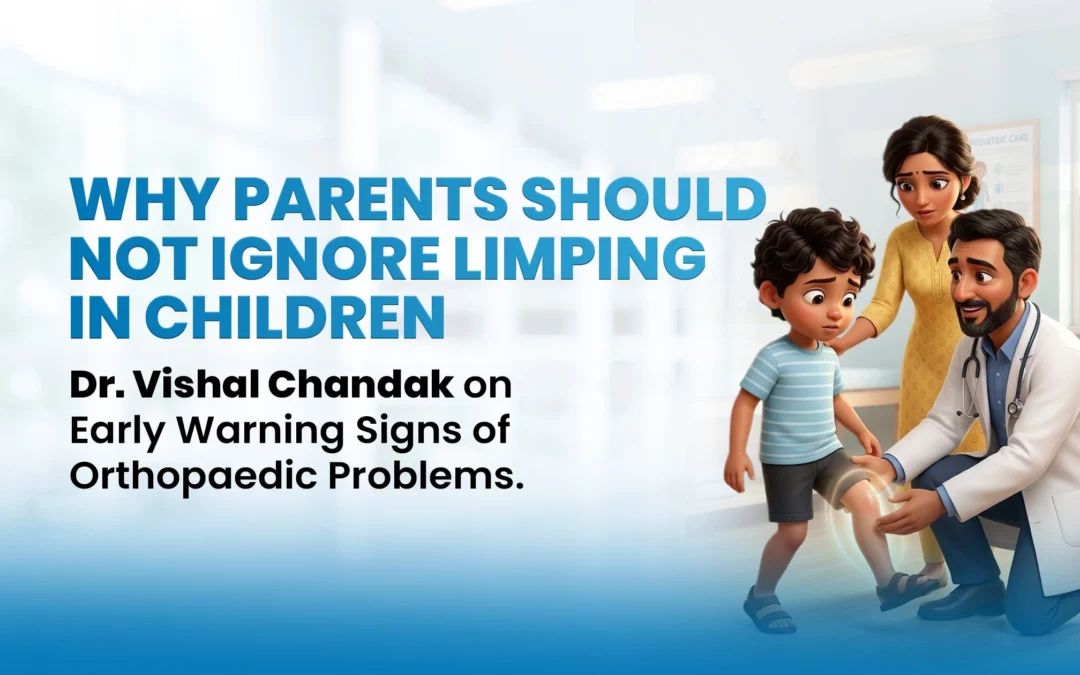
Many parents assume that children occasionally limping while walking or running is normal. Sometimes it is attributed to a minor fall, muscle strain, or simply a phase of growth. While temporary limping can occur in active children, persistent or unexplained limping should never be ignored.
According to Dr. Vishal Chandak, limping is often the body’s way of signalling that something may be wrong in the bones, joints, or muscles. Early evaluation helps identify the cause and prevent long-term complications.
What Exactly Is Limping?
Limping refers to an abnormal walking pattern where a child avoids putting normal weight on one leg. This may appear as:
- Uneven steps while walking
- Dragging of one leg
- Complaints of pain while walking or running
- Difficulty keeping up with other children
- Sudden change in the child’s gait
Sometimes the child may not complain of pain but still alter the way they walk.
Common Causes of Limping in Children
Limping can occur for several reasons. Some are temporary, while others require medical attention.
Possible causes include:
- Minor injuries or muscle strain
- Paediatric fractures
- Joint infections or inflammation
- Hip disorders
- Bone growth abnormalities
- Limb length differences
- Neuromuscular conditions
In some cases, limping may be the first visible sign of an underlying orthopaedic condition.
Warning Signs Parents Should Watch For
Parents should consider consulting a paediatric orthopaedic specialist if a child has:
- Limping lasting more than a few days
- Limping without any obvious injury
- Refusal to bear weight on one leg
- Complaints of persistent hip, knee, or leg pain
- Fever accompanying joint pain
- Reduced activity or difficulty walking
These symptoms require proper evaluation rather than observation alone.
Why Early Evaluation Is Important
In paediatric orthopaedics, timing plays a crucial role.
When limping is assessed early, doctors can:
- Identify the exact cause
- Rule out serious conditions
- Begin appropriate treatment
- Prevent worsening of the problem
Delays can allow certain conditions to progress, sometimes leading to more complex treatment later.
Children Often Hide Pain
Children may not always clearly describe discomfort. Instead, they may:
- Avoid physical activities
- Sit out during play
- Walk slower than usual
- Develop unusual walking patterns
Parents should pay attention to behavioural changes that indicate discomfort.
Limping Does Not Always Mean Surgery
One of the common fears among parents is that consulting an orthopaedic surgeon will automatically lead to surgery.
In reality, many cases of limping are treated through:
- Observation and monitoring
- Rest and activity modification
- Physiotherapy
- Medications for inflammation
Surgery is considered only when absolutely necessary.
The Role of a Paediatric Orthopaedic Specialist
Paediatric orthopaedic specialists are trained to understand:
- Growth plate development
- Age-specific bone conditions
- Child-specific diagnostic patterns
- Long-term impact on mobility
Their evaluation ensures that treatment supports healthy growth rather than interfering with it.
Final Thought
Limping in children is not always serious, but it should never be dismissed without observation. Persistent or unexplained limping is often the earliest indicator that something requires medical attention.
According to Dr. Vishal Chandak, early evaluation is the safest way to protect a child’s mobility, growth, and long-term joint health.
When it comes to children’s movement, timely attention can make a lasting difference.