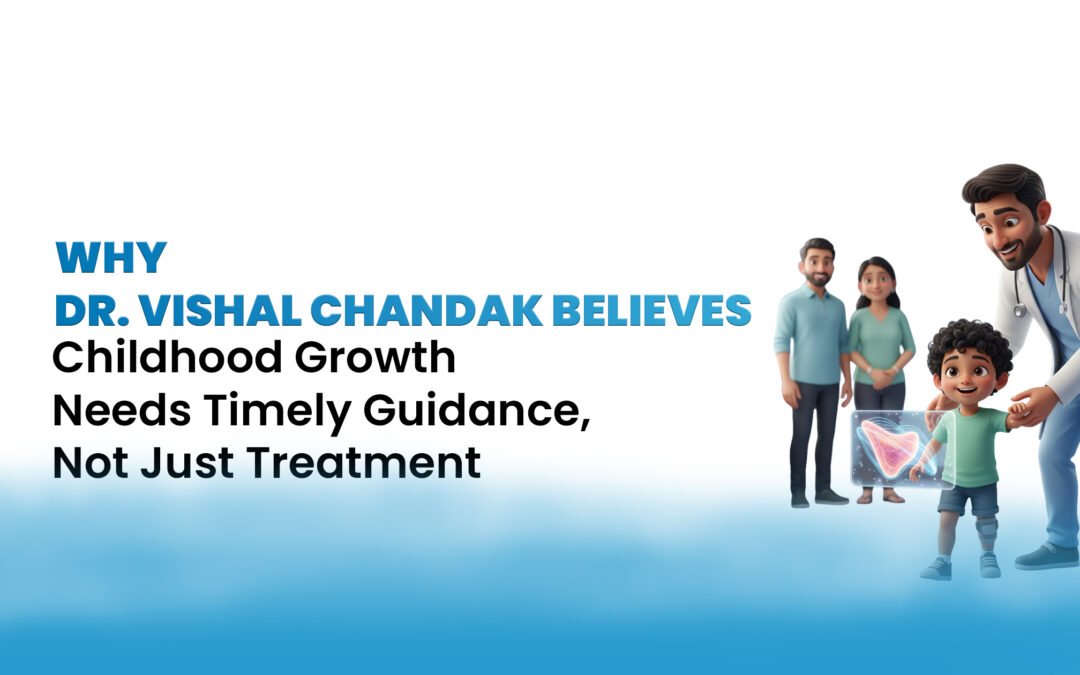
Parents often associate growth concerns with treatment—medication, braces, surgery, or physiotherapy. But according to Dr. Vishal Chandak, one of the most respected Paediatric Orthopaedic Surgeons in Marathwada, the biggest determinant of a child’s long-term outcome is not treatment alone, but timely guidance.
In paediatric orthopedics, growth is not a static process. It is dynamic, constantly changing, and deeply influenced by when decisions are made—not just what decisions are made.
This perspective has shaped Dr. Chandak’s approach to child care over the years: guiding families early, clearly, and realistically—often before treatment is even required.
Growth Is a Process, Not a Problem
One of the most common misconceptions parents have is viewing growth as something that needs correction.
In reality:
- Growth is natural but uneven
- Every child grows at a different pace
- Temporary deviations are common
- Not every concern needs immediate intervention
Dr. Chandak strongly believes that many growth-related worries arise from lack of guidance, not actual pathology.
When parents receive the right explanation at the right time, unnecessary anxiety, over-treatment, and delayed decisions can all be avoided.

Why “Wait and Watch” Without Guidance Can Be Risky
Parents are often told to “wait and watch.” While observation is sometimes appropriate, unguided waiting can be harmful.
Without structured guidance:
- Subtle deformities may progress
- Growth plate issues may be missed
- Timing for simple correction may be lost
- Treatment later may become more complex
Timely guidance means:
- Knowing what to observe
- Knowing how long to observe
- Knowing when to intervene
This distinction is critical in growing children.
Early Guidance Often Prevents Aggressive Treatment
A key belief Dr. Vishal Chandak shares with parents is this:
early guidance often reduces the need for major treatment later.
With proper monitoring:
- Minor alignment issues can self-correct
- Growth modulation can be planned instead of surgery
- Physiotherapy can be introduced at the right stage
- Functional outcomes improve significantly
Many conditions that appear “surgical” later could have been managed conservatively if guided earlier.
Growth Is About Function, Not Just Measurements
Parents often focus on numbers:
- Height percentiles
- Limb length
- X-ray angles
While these matter, Dr. Chandak emphasizes that function matters more than figures.
Key questions he focuses on include:
- Is the child moving comfortably?
- Is mobility age-appropriate?
- Is balance developing normally?
- Is growth affecting daily activity?
Treatment decisions are guided by how the child functions, not just how reports look.å
The Importance of Timing in Paediatric Orthopedics
In adult orthopedics, timing is flexible.
In paediatric orthopedics, timing is everything.
Growth-related decisions depend on:
- Age of the child
- Remaining growth potential
- Stage of skeletal maturity
- Rate of progression
Timely guidance ensures that parents do not:
- Act too early and overcorrect
- Act too late and lose simpler options
This balance is where specialist expertise becomes essential.
Why Many Growth Issues Are Missed in Routine Care
General consultations often focus on symptoms, not growth patterns.
As a result:
- Early deformities go unnoticed
- Asymmetries are dismissed
- Growth plate stress is overlooked
- Long-term planning is absent
A paediatric orthopaedic approach looks beyond the present complaint and evaluates where the child’s growth is heading.
Guidance Also Means Reassurance
Not every visit results in treatment—and that is often good news.
One of the most valuable aspects of timely guidance is reassurance:
- Reassuring parents when growth is normal
- Explaining expected variations
- Reducing unnecessary interventions
- Preventing fear-driven decisions
Parents often feel relieved simply knowing their child is being monitored correctly.
A Message for Parents Across Marathwada
Access to specialised paediatric orthopaedic guidance has improved significantly across Marathwada and Maharashtra. Parents no longer need to wait for visible deformities or pain to seek expert input.
Dr. Chandak encourages parents to:
- Seek guidance early
- Ask questions openly
- Avoid comparisons
- Focus on long-term independence
Early guidance is not about labelling a problem—it is about protecting a child’s future growth.
Final Thought
Treatment fixes a problem.
Guidance prevents one.
According to Dr. Vishal Chandak, the most powerful intervention in paediatric orthopedics is not always surgery or therapy—it is timely, informed guidance that respects a child’s growth and potential.
When parents understand growth early, children benefit for life.