
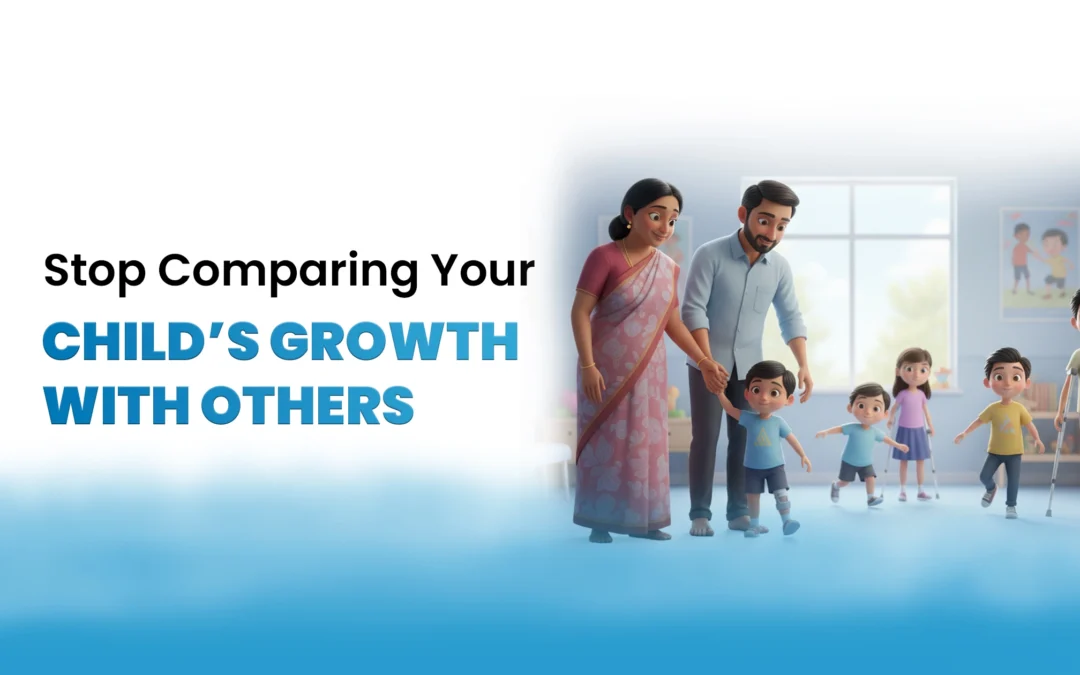
One of the most common concerns parents carry into a clinic is not pain, deformity, or difficulty—it is comparison.
“My neighbour’s child started walking earlier.”
“My niece is taller than my son.”
“My friend says my child’s legs look different.”
According to Dr. Vishal Chandak, comparison is one of the biggest sources of unnecessary anxiety in child growth—and often the reason parents worry when there is no real problem.
Growth is not a race. And in paediatric orthopedics, comparison can sometimes do more harm than good.
Every Child Grows on a Different Timeline
One fundamental truth parents often overlook is this:
there is no single “normal” growth pattern.
Children differ in:
- Genetics
- Body build
- Muscle tone
- Bone maturity
- Activity levels
Two children of the same age can:
- Walk at different times
- Grow in spurts at different stages
- Appear uneven temporarily
- Develop coordination at different speeds
Dr. Chandak emphasizes that variation is natural, especially during early childhood and adolescence.

Why Comparison Creates Unnecessary Fear
When parents compare, they often:
- Focus on appearance instead of function
- Panic over temporary differences
- Seek opinions too late or too aggressively
- Push children unnecessarily
This fear-driven approach may lead to:
- Over-treatment
- Loss of confidence in the child
- Reduced physical activity
- Emotional stress for parents and children
Most growth-related concerns need observation and guidance, not alarm.
Growth Is About Function, Not Appearance
A key principle Dr. Chandak follows is this:
how a child functions matters more than how a child looks.
Instead of asking:
- “Do the legs look straight?”
- “Is my child shorter than others?”
Parents should ask:
- Is my child active?
- Is movement comfortable?
- Is balance improving with age?
- Is there pain or limitation?
If function is good, growth often corrects itself over time.
Social Pressure Plays a Bigger Role Than Medical Reality
In today’s world, comparison doesn’t stop at relatives—it extends to:
- Schools
- Playgrounds
- Social media
- Parenting groups
Well-meaning comments like:
- “Consult someone early.”
- “That doesn’t look normal.”
can create panic without medical basis.
Dr. Chandak frequently reassures parents that medical decisions should never be based on social pressure.
Growth Spurts Can Create Temporary Imbalance
During growth spurts, children may:
- Appear awkward
- Develop temporary asymmetry
- Lose coordination briefly
- Experience muscle tightness
These phases often correct naturally as growth stabilises.
Comparing a child during a growth spurt with a child in a stable phase is misleading and unnecessary.
When Comparison Delays the Right Action
Ironically, comparison can also delay treatment.
Some parents wait because:
- “Others had it worse.”
- “Someone else said it will be fine.”
Both overreaction and underreaction can occur when parents rely on comparison rather than individual assessment.
What Parents Should Do Instead of Comparing
Dr. Chandak advises parents to:
- Observe their child over time
- Focus on movement and comfort
- Seek guidance if something feels persistent
- Trust professional evaluation over opinions
Every child deserves to be evaluated on their own growth story, not someone else’s.
The Role of Timely Guidance
Timely guidance allows:
- Differentiation between normal variation and concern
- Reassurance when growth is healthy
- Early intervention only when truly needed
Most importantly, it replaces fear with clarity.
A Message for Parents in Marathwada
Parents across Marathwada now have access to specialised paediatric orthopedic care. Instead of comparing children with peers, relatives, or online examples, parents can seek individualised guidance based on science and experience.
Comparison creates anxiety.
Guidance creates confidence.
Final Thought
No two children grow the same way—and they don’t need to.
According to Dr. Vishal Chandak, the healthiest approach to childhood growth is not comparison, but understanding, patience, and timely guidance.
When parents stop comparing, children grow with confidence—and confidence supports healthy development.