
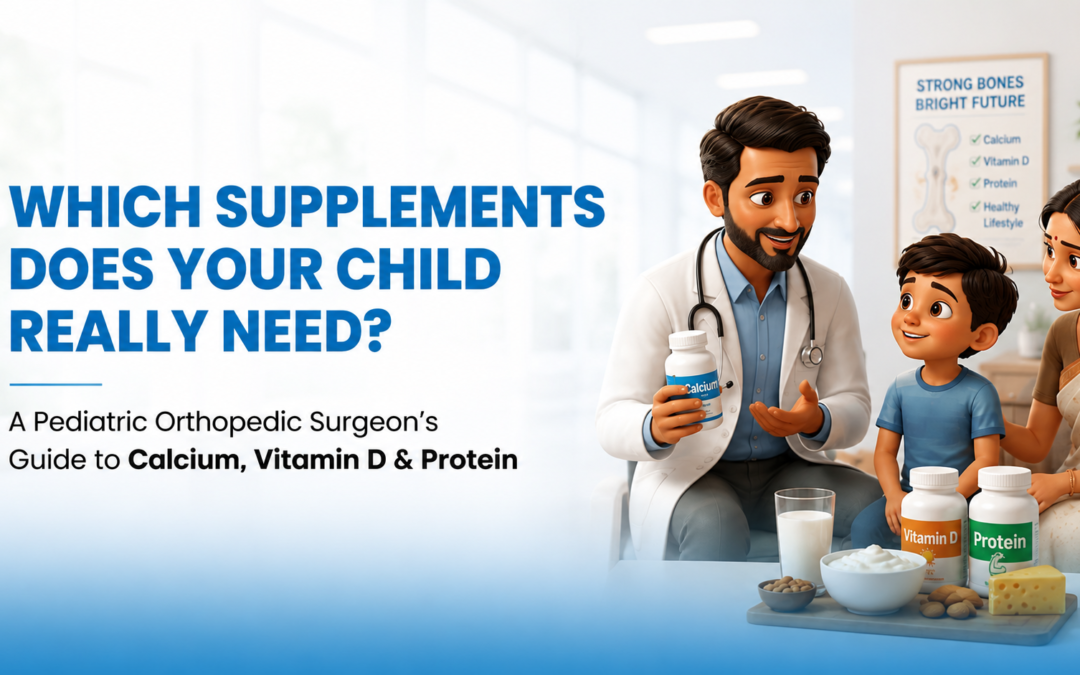
Parents today are more health-conscious than ever. Walk into any pharmacy or browse online, and you’ll find dozens of supplements claiming to make children taller, stronger, smarter, and healthier.
But here’s the question every parent should ask:
Does my child actually need these supplements?
As a pediatric orthopedic surgeon, one of the most common concerns I hear from parents is:
“Doctor, should I start calcium supplements?”
“Does my child need Vitamin D?”
“Are protein powders safe for children?”
The truth is that not every child needs supplements. However, some children do have nutritional deficiencies that can affect bone growth, height development, muscle strength, immunity, posture, and overall orthopedic health.
Understanding which nutrients matter—and when supplementation is genuinely required—can help parents make informed decisions.
Why Nutrition Matters More Than Most Parents Realize
A child’s bones are constantly growing and remodeling.
Unlike adults, children are building their future skeleton every single day. Poor nutrition during these growing years can contribute to:
- Weak bones in children
- Delayed growth
- Frequent fractures
- Poor muscle development
- Bone pain
- Delayed recovery from injuries
- Reduced physical performance
- Growth plate problems
Healthy bone development requires much more than simply drinking milk. Three nutrients play a particularly important role:
- Calcium
- Vitamin D
- Protein
Let’s understand each of them.
Calcium: The Building Block of Strong Bones
Calcium is one of the most important minerals for growing children.
Nearly 99% of the body’s calcium is stored in bones and teeth, making it essential for skeletal development and bone density. Children who do not consume adequate calcium may struggle to achieve optimal peak bone mass later in life.
Signs Your Child May Not Be Getting Enough Calcium
Some children with low calcium intake may experience:
- Frequent muscle cramps
- Bone pain
- Weak teeth
- Delayed growth
- Increased fracture risk
- Fatigue during physical activity
Best Natural Sources of Calcium
Parents should prioritize dietary sources before considering supplements. Good calcium-rich foods include:
- Milk
- Curd
- Paneer
- Cheese
- Ragi
- Sesame seeds
- Almonds
- Tofu
- Green leafy vegetables
Does Every Child Need Calcium Supplements?
Not necessarily.
If a child consumes a balanced diet with adequate dairy or alternative calcium sources, supplementation may not be required.
However, calcium supplements may be considered when:
- The child avoids dairy completely
- Dietary intake is consistently poor
- There is documented calcium deficiency
- Recurrent fractures are occurring
- Certain medical conditions affect calcium absorption
A pediatric orthopedic specialist or pediatrician should evaluate before starting long-term supplementation.
Vitamin D: The Hidden Deficiency Affecting Indian Children
One of the most common nutritional deficiencies seen today is Vitamin D deficiency in children.
Surprisingly, this occurs even in sunny countries like India.
Modern lifestyles have dramatically reduced children’s exposure to sunlight. School schedules, indoor activities, mobile screens, and limited outdoor play contribute significantly to low Vitamin D levels.
Why Vitamin D Is Essential
Vitamin D helps the body absorb calcium effectively.
Without adequate Vitamin D:
- Bones become weaker
- Bone mineralization is impaired
- Growth may be affected
- Fracture healing can be slower
- Muscle strength may decrease a
Symptoms of Vitamin D Deficiency in Children
Parents may notice:
- Leg pain
- Bone pain
- Frequent fatigue
- Delayed milestones
- Muscle weakness
- Recurrent fractures
- Difficulty participating in sports
Natural Ways to Improve Vitamin D Levels
Some of the best sources include:
- Morning sunlight exposure
- Egg yolk
- Fatty fish
- Fortified dairy products
- Fortified cereals
When Are Vitamin D Supplements Necessary?
Supplementation may be recommended when:
- Blood tests confirm deficiency
- A child has persistent bone pain
- Growth concerns are present
- Recurrent fractures occur
- The child has limited sun exposure
Vitamin D supplementation should ideally be guided by medical evaluation rather than self-prescription.
Protein: The Most Underrated Nutrient for Growing Children
When parents think about bone health, they often focus only on calcium. However, bones are not made of minerals alone.
Protein forms a critical part of bone structure while also supporting:
- Muscle growth
- Tissue repair
- Height development
- Immunity
- Recovery after injuries
- Sports performance
Signs Your Child May Not Be Getting Enough Protein
Protein deficiency may contribute to:
- Poor weight gain
- Reduced muscle mass
- Fatigue
- Frequent illness
- Slow recovery from injuries
- Reduced growth velocity
Best Protein Sources for Children
Excellent protein-rich foods include:
Vegetarian Sources
- Milk
- Paneer
- Curd
- Lentils
- Dal
- Soy products
- Tofu
- Chickpeas
- Rajma
- Quinoa
- Nuts
Non-Vegetarian Sources
- Eggs
- Chicken
- Fish
- Lean meats
Should Children Take Protein Powders?
Many parents ask whether protein powders are necessary.
For most healthy children, the answer is no.
A balanced diet usually provides sufficient protein requirements. Protein supplements should only be considered when:
- Dietary intake is inadequate
- The child is underweight
- Certain medical conditions exist
- A specialist recommends supplementation
Protein powders should never replace real food. They should only supplement nutrition when medically appropriate.
Common Mistakes Parents Make
Mistake #1: Starting Supplements Without Testing
Not every child with tiredness or poor appetite has a deficiency.
Blind supplementation may be unnecessary and occasionally harmful.
Mistake #2: Assuming More Is Better
Excess calcium or Vitamin D does not automatically create stronger bones. Appropriate dosing matters.
Mistake #3: Ignoring Physical Activity
Nutrition alone cannot build healthy bones.
Children need:
- Outdoor play
- Running
- Jumping
- Sports participation
- Weight-bearing activities
These activities help bones become stronger naturally.
Mistake #4: Relying on Advertised “Height Growth” Products Many products claim to increase height dramatically.
Height primarily depends on:
- Genetics
- Nutrition
- Sleep
- Hormonal health
- Overall growth patterns
No supplement can guarantee increased height.
When Should Parents Consult a Pediatric Orthopedic Specialist?
Consider professional evaluation if your child experiences:
- Recurrent fractures
- Persistent bone pain
- Bow legs
- Knock knees
- Delayed growth
- Walking abnormalities
- Frequent muscle weakness
- Vitamin D deficiency despite treatment
- Concerns about bone development
Early assessment allows identification of nutritional deficiencies, growth-related concerns, and orthopedic conditions before they become more significant problems.
The Bottom Line
Most children do not need a shelf full of supplements.
What they truly need is:
- Balanced nutrition
- Adequate calcium intake
- Healthy Vitamin D levels
- Sufficient protein
- Regular outdoor activity
- Good sleep habits
- Timely medical evaluation when concerns arise
Supplements can be valuable when a genuine deficiency exists, but they should support a healthy lifestyle—not replace it.
Strong bones are built through consistent habits, proper nutrition, and informed healthcare decisions during childhood.
For concerns regarding your child’s bone health, growth, posture, recurrent fractures, or nutritional deficiencies, consulting a pediatric orthopedic specialist can help ensure your child grows stronger, healthier, and more confidently.