
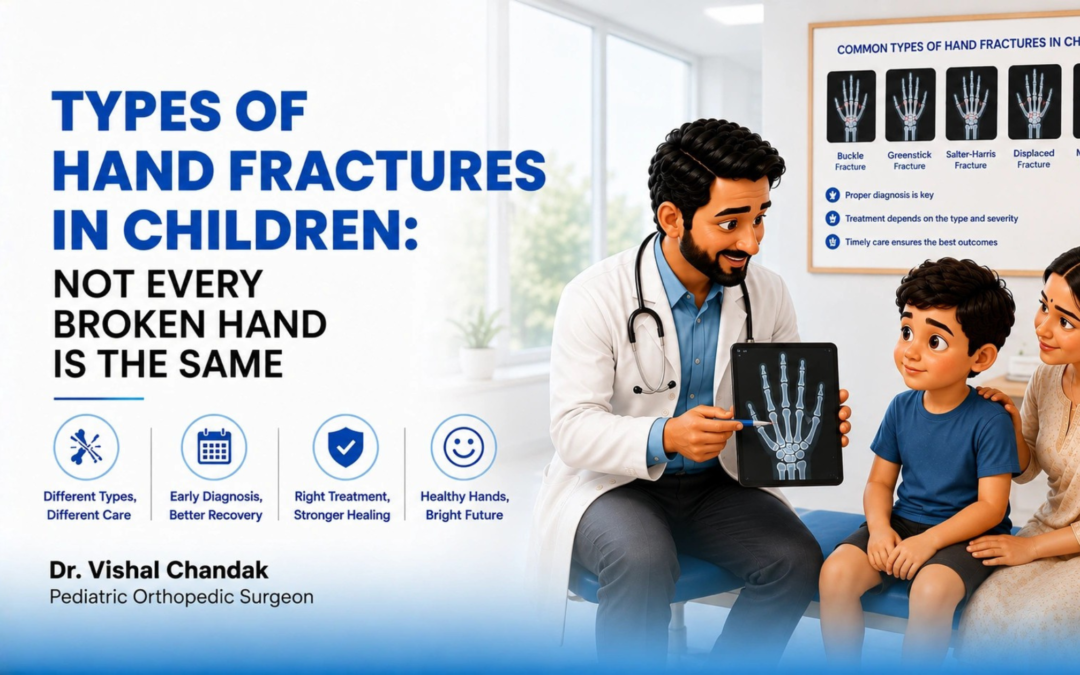
A child falls off the monkey bars, trips while running, or takes a tumble during cricket practice. They come home holding their hand, and the first thought is often, “It’s probably just a sprain.” But sometimes, what looks like a minor injury could actually be a hand fracture. And here’s something many parents don’t realize—not all hand fractures are the same. Different bones can break in different ways, and each type needs the right treatment to heal properly.
Let’s take a closer look at the different types of hand fractures in children, how they happen, and why getting the diagnosis right matters.
Why Are Hand Fractures Common in Children?
Children are naturally active. They climb, jump, run, cycle, and play sports every day. While all that activity is great for their development, it also makes hand injuries quite common.
Unlike adults, children’s bones are still growing. They are more flexible, but they also have growth plates, which are softer areas near the ends of bones. These growth plates are more vulnerable to injury and require special attention.
The good news? Children’s bones heal remarkably well—especially when treated early.
What Bones Make Up the Hand?
The hand is made up of 27 bones, including:
- 8 wrist bones (carpal bones)
- 5 palm bones (metacarpals)
- 14 finger bones (phalanges)
A fracture can occur in any of these bones, and the treatment depends on which bone is affected and how severe the injury is.
Common Types of Hand Fractures in Children
- Finger (Phalangeal) Fractures
These are among the most common hand fractures in children. They usually occur when:
- A ball hits the finger
- A finger gets caught in a door
- The child falls onto an outstretched hand
Symptoms include:
- Swelling
- Pain
- Bruising
- Difficulty bending the finger
- Crooked appearance in some cases
Most finger fractures heal well with splinting, but displaced fractures may need realignment.
- Metacarpal Fractures
The metacarpals are the five long bones that connect the wrist to the fingers. These fractures often happen because of:
- Falls
- Sports injuries
- Bicycle accidents
- Direct blows to the hand
A fracture of the fifth metacarpal (below the little finger) is commonly known as a Boxer’s Fracture, although children usually sustain it after a fall rather than punching something.
- Thumb Fractures
The thumb plays a vital role in gripping and pinching. A fracture involving the thumb can make everyday tasks surprisingly difficult. Children may struggle with:
- Holding a pencil
- Picking up small objects
- Buttoning clothes
- Opening bottles
Since the thumb contributes significantly to hand function, proper treatment is essential.
- Growth Plate (Physeal) Fractures
These deserve special attention.Growth plates are areas of developing cartilage located near the ends of children’s bones. An injury here may affect future bone growth if left untreated. Doctors classify these fractures using the Salter-Harris classification, which helps determine treatment and prognosis. Early diagnosis is important to prevent growth disturbances.
- Avulsion Fractures
Sometimes, instead of the ligament tearing, it pulls off a small piece of bone. This is called an avulsion fracture. These injuries often occur during sports or sudden twisting movements. Although the broken fragment may be small, treatment is still important to restore normal movement.
- Crush Injuries
A heavy object falling on the hand or fingers can cause crush fractures. These injuries may involve:
- Multiple broken bones
- Nail-bed injuries
- Skin damage
- Soft tissue injuries
Crush injuries should always be evaluated promptly because they often require more than just treating the bone.
- Open Fractures
In an open fracture, the broken bone pierces the skin or there is a wound communicating with the fracture. Although less common, these injuries require urgent medical attention because of the higher risk of infection.
Treatment usually includes:
- Cleaning the wound
- Antibiotics
- Fracture stabilization
- Sometimes surgery
Children’s Bones Can Break Differently Than Adults’
One of the fascinating things about children’s bones is that they don’t always break completely. Here are two unique fracture patterns seen mainly in children.
Greenstick Fracture
Imagine trying to snap a fresh green twig—it bends and cracks but doesn’t break all the way through. That’s exactly what happens in a greenstick fracture. Because children’s bones are more flexible, one side of the bone breaks while the other side bends.
Buckle (Torus) Fracture
A buckle fracture occurs when the bone compresses rather than breaking completely. It’s one of the most stable fractures and usually heals very well with a splint or cast.
Signs Your Child May Have a Hand Fracture
Sometimes children continue using their hand despite a fracture. Watch for:
- Persistent pain
- Swelling
- Bruising
- Difficulty moving fingers
- Reduced grip strength
- Finger looking bent or rotated
- Pain when touching the injured area
If symptoms persist beyond a few hours, it’s best to seek medical evaluation.
How Are Hand Fractures Diagnosed?
The doctor will:
- Examine the hand carefully
- Check finger alignment and movement
- Assess circulation and nerve function
- Order X-rays
In some complex injuries, additional imaging such as a CT scan may be required.
Treatment Depends on the Type of Fracture
Not every fracture needs surgery. Treatment options may include:
Splinting
Ideal for stable fractures.
Casting
Used when more support is required.
Closed Reduction
If the bones have shifted, the doctor may gently reposition them without surgery.
Surgery
Reserved for fractures that are:
- Unstable
- Severely displaced
- Involving joints
- Associated with significant growth plate injuries
- Open fractures
Children generally heal much faster than adults.
Why Early Treatment Matters
Ignoring a hand fracture can lead to:
- Poor healing
- Finger deformity
- Reduced hand function
- Joint stiffness
- Growth disturbances
- Difficulty writing or playing sports later
Early diagnosis usually means simpler treatment and better recovery.
Can Children Regain Full Hand Function?
In most cases, yes. With timely treatment and appropriate follow-up, children typically regain:
- Full movement
- Normal grip strength
- Excellent hand function
- Return to sports and daily activities
Their growing bones have an impressive ability to remodel and heal.
Tips for Parents After a Hand Injury
- Don’t assume it’s “just a sprain.”
- Apply ice wrapped in a cloth for 15–20 minutes.
- Keep the hand elevated to reduce swelling.
- Avoid forcing your child to move painful fingers.
- Seek medical evaluation if pain or swelling persists.
- Follow the full treatment plan, including follow-up visits.
Final Thoughts
A hand fracture in a child may seem like a small injury, but every bone in the hand plays an important role in growth, movement, and daily activities. From finger fractures and thumb injuries to growth plate fractures, each type requires a different approach to ensure proper healing.
The good news is that children’s bones heal exceptionally well when treated early. If your child has persistent hand pain, swelling, or difficulty moving their fingers after a fall or sports injury, don’t ignore it. A timely evaluation by a pediatric orthopaedic specialist can help prevent long-term problems and get your child back to doing what they love.