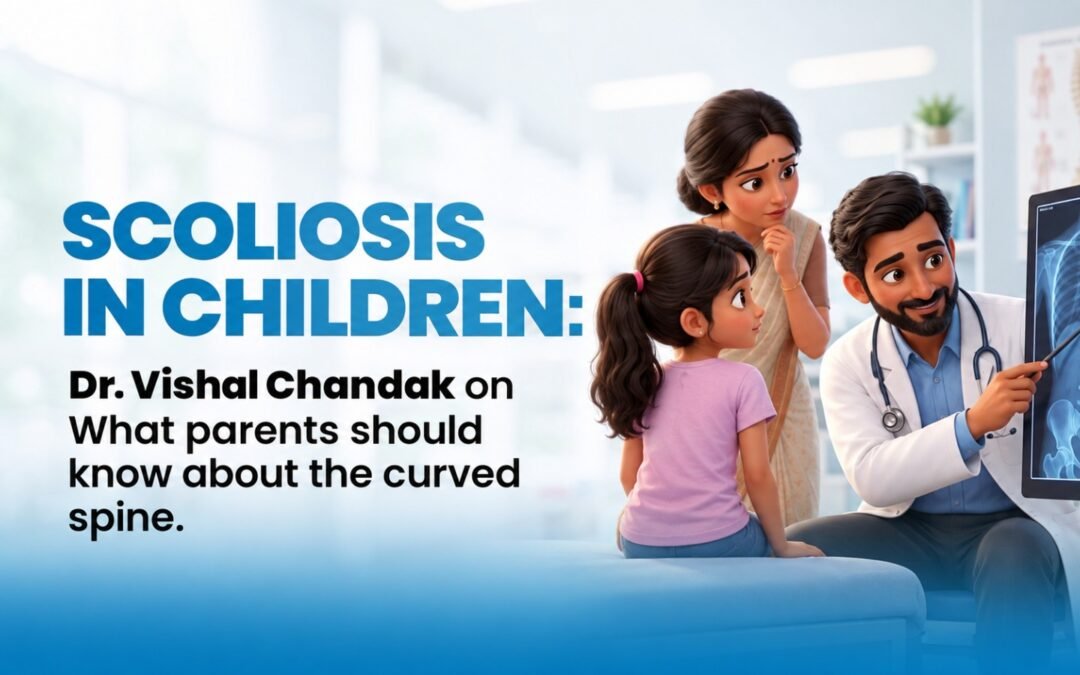
“Why is one shoulder higher than the other?”
Sometimes, a small difference in posture is just that posture. But in some children, it can be an early sign of scoliosis, a condition where the spine develops an abnormal sideways curve.
And here’s what many parents don’t realise: scoliosis does not always cause back pain.
What Is Scoliosis?
A healthy spine is naturally curved when viewed from the side. In scoliosis, the spine develops a sideways curvature and may also rotate.
Scoliosis in children can develop during different stages of growth. It is particularly important to identify scoliosis during periods of rapid growth because the curve may change as the child grows.
What Does Scoliosis Look Like?
Parents may notice:
- One shoulder appearing higher than the other
- Uneven shoulder blades
- Uneven waistline
- One hip appearing higher
- Clothes hanging unevenly
- The child leaning to one side
- A visible curve in the back when bending forward
Sometimes, these changes are subtle and may be noticed first by a parent, teacher, coach or pediatrician.
Does Scoliosis Cause Back Pain?
Not necessarily.
Many children with early scoliosis have no pain at all. This is why waiting for your child to complain of back pain is not the best way to identify a spinal curve.
A noticeable change in spinal alignment deserves an evaluation, particularly if the child is still growing.
Can Scoliosis Get Worse as a Child Grows?
This is one of the biggest concerns parents have.
The progression of childhood scoliosis depends on several factors, including the child’s age, growth remaining, curve size and type of scoliosis.
Some curves remain stable, while others can progress during growth spurts.
That is why early scoliosis detection and regular monitoring can be important.
Does Every Child With Scoliosis Need Surgery?
No.
Treatment depends on the individual child and the severity and progression of the curve.
Depending on the situation, scoliosis treatment in children may involve:
- Observation and regular monitoring
- Physiotherapy or exercises in selected cases
- Bracing for certain growing children
- Surgery for specific severe or progressive curves
The treatment plan should be based on proper clinical assessment and appropriate imaging when required.
When Should Parents Consult a Pediatric Orthopedic Specialist?
If you notice an uneven shoulder, uneven hips, abnormal spinal curvature, persistent leaning or other changes in your child’s posture, don’t panic — but don’t ignore it either.
A pediatric orthopedic surgeon can assess the child’s spine, growth stage and curve to determine whether treatment or simply observation is appropriate.
Remember:
A curved spine is not always an emergency. But a changing spine deserves attention.
If you notice changes in your child’s posture or spinal alignment, getting it evaluated can provide clarity and help guide the right next step.