
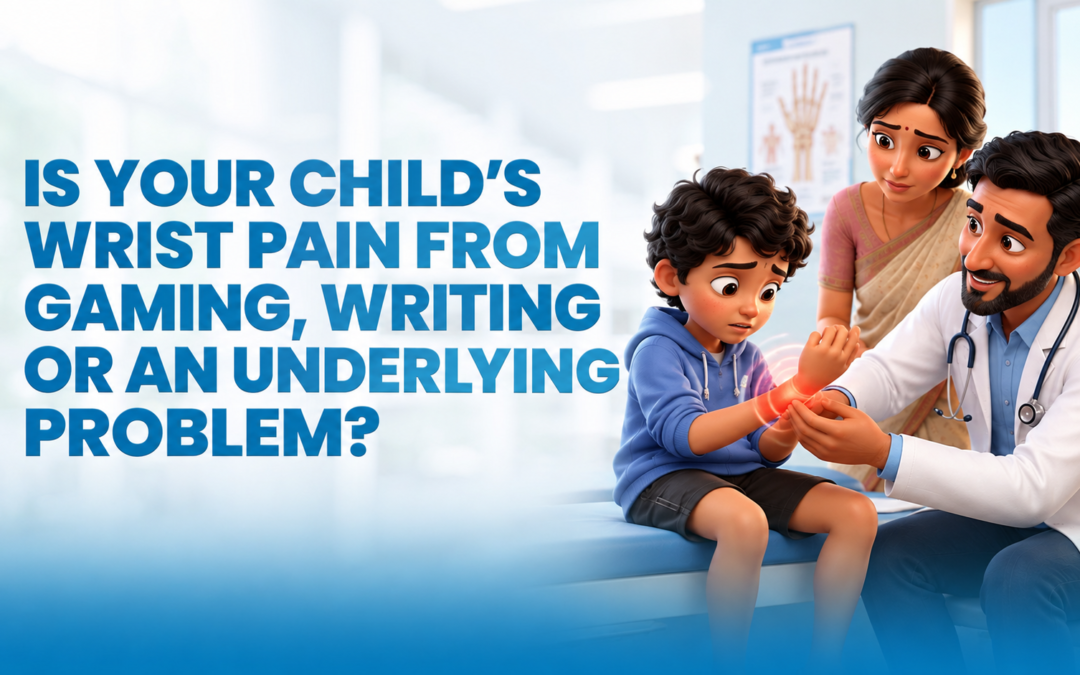
Your child complains of wrist pain after gaming, writing homework, using a tablet or scrolling on a phone. You may assume they have simply overused their hand and that a little rest will fix everything. Often, that may be the case. But wrist pain in children should not automatically be blamed on screen time or schoolwork, especially when it keeps returning, affects grip strength or makes everyday activities uncomfortable. The important question is not just how much your child uses their hands, but what triggers the pain and whether anything else is going on.
Can Gaming and Writing Cause Wrist Pain?
Yes. Repeated hand movements, prolonged gaming sessions, gripping a controller tightly, and writing for long periods can strain the muscles and tendons around the wrist.
Children may also bend their wrists awkwardly while using a laptop, hold a phone for extended periods, or work at a desk that does not suit their height.
Common symptoms of overuse include:
Aching around the wrist after prolonged activity
Discomfort while writing, gaming or using a mouse
Pain that improves with rest
Tiredness or discomfort when gripping objects
Frequent breaks, a comfortable hand position and reducing activities that trigger pain may help. However, persistent symptoms need assessment rather than repeated rest alone.
When Could Wrist Pain Be Something More?
Not every painful wrist is caused by overuse. A fall during sports, a minor fracture, a sprain or irritation around a tendon can also cause discomfort.
In younger children and teenagers, the growth plates near the wrist are another important consideration. These areas of developing bone can be injured, sometimes even when the injury initially looks minor.
Pay attention if your child has:
Pain following a fall or direct impact
Swelling, bruising or tenderness in one specific spot
Difficulty gripping a pencil or holding a glass
Reduced wrist movement
Numbness, tingling or weakness in the hand
Pain that continues despite reducing the activity
A wrist injury does not always cause dramatic swelling. If pain follows an injury, seek medical advice, particularly if your child cannot use the hand normally. Deformity, severe pain, or a pale, cold or numb hand needs urgent assessment.
How Can Parents Help at Home?
Start by noticing when the pain appears. Does it happen after a long gaming session, during handwriting, or even when your child wakes up?
Encourage regular breaks, a relaxed grip and a neutral wrist position. Adjust the desk and chair to support comfortable writing, and avoid long, uninterrupted gaming sessions.
Do not force wrist exercises, massage a swollen area aggressively or continue an activity that causes pain. If symptoms persist, worsen or interfere with schoolwork and play, arrange a clinical examination.
When Should You Consult a Paediatric Orthopaedic Surgeon?
A doctor can assess the location of the pain, wrist movement, grip and any history of injury. X-rays or other investigations may be recommended depending on the findings.
The goal is not to stop children from gaming, writing or playing sports altogether. It is to identify the cause of pain and help them return to their activities safely.
Remember: A sore wrist after a busy day may be temporary, but recurring wrist pain is worth investigating. Early assessment can help prevent a small problem from becoming a bigger obstacle to your child’s everyday life.