
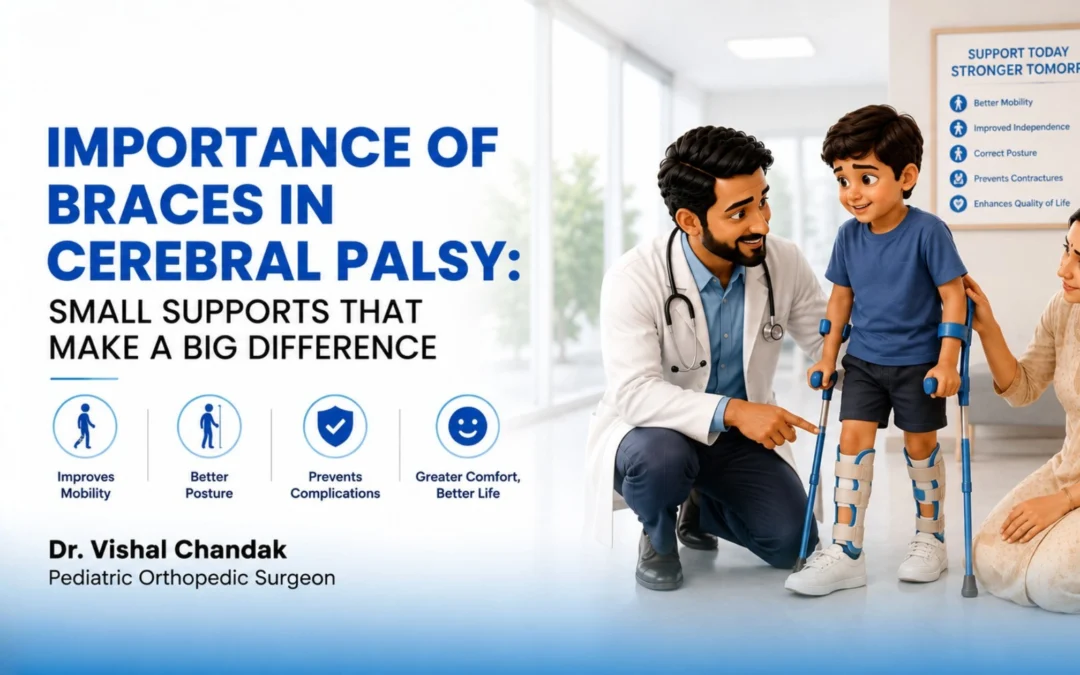
When parents hear the word “brace,” they often imagine something restrictive or uncomfortable. It’s natural to wonder, “Will my child become dependent on it?” or “Does wearing a brace mean my child’s condition is getting worse?”
The answer is no.
In fact, braces are one of the most valuable tools in managing cerebral palsy (CP). They don’t cure the condition, but they can significantly improve mobility, posture, comfort, and independence. For many children, the right brace at the right time can make everyday activities much easier.
Let’s understand why braces are so important and how they help children with cerebral palsy lead more active lives.
What Is Cerebral Palsy?
Cerebral palsy is a group of movement and posture disorders caused by damage to the developing brain, usually before, during, or shortly after birth.
Children with cerebral palsy may experience:
- Muscle stiffness (spasticity)
- Poor balance
- Muscle weakness
- Difficulty walking
- Joint contractures
- Abnormal posture
- Delayed motor milestones
Every child with cerebral palsy is different. Some walk independently, while others require assistive devices.
What Are Braces?
Braces, also called orthoses or orthotic devices, are specially designed supports worn on different parts of the body.
They are customized according to each child’s needs and may support:
- Feet
- Ankles
- Knees
- Legs
- Hands
- Wrists
- Elbows
- Spine
The goal isn’t to restrict movement—it’s to improve it.
Why Do Children With Cerebral Palsy Need Braces?
Children with cerebral palsy often have muscles that pull unevenly on bones and joints. Over time, this can lead to:
- Foot deformities
- Toe walking
- Bent knees
- Hip problems
- Tight muscles
- Poor balance
- Joint contractures
Braces help guide the body into better alignment, allowing movement to become safer and more efficient.
Benefits of Braces in Cerebral Palsy
01. Improve Walking Pattern
One of the biggest reasons children wear braces is to improve how they walk. Braces can help:
- Keep the foot flat on the ground
- Reduce toe walking
- Improve balance
- Make walking smoother
- Reduce tripping and falls
Many children become more confident walkers after using properly fitted braces.
02. Prevent Joint Deformities
Without proper support, abnormal muscle forces can gradually change the shape of growing bones and joints.
Braces help maintain proper alignment and reduce the risk of:
- Foot deformities
- Ankle contractures
- Knee flexion deformities
- Joint stiffness
Preventing deformities early may reduce the need for surgery later.
03. Reduce Muscle Tightness
Braces gently stretch certain muscles over long periods.
This can:
- Slow the progression of muscle tightness
- Maintain joint flexibility
- Improve range of motion
Braces work best when combined with regular physiotherapy.
04. Improve Balance and Stability
Children with cerebral palsy often struggle with balance because their muscles don’t work together efficiently.
Braces provide stability around joints, making it easier to:
- Stand independently
- Walk longer distances
- Climb stairs
- Play safely
Improved stability also builds confidence.
05. Increase Independence
The ultimate goal of treatment is not simply better movement—it’s greater independence. With better support, many children find it easier to:
- Walk to school
- Participate in therapy
- Play with friends
- Perform daily activities
- Explore their surroundings
Even small improvements can make a huge difference in a child’s quality of life.
06. Improve Energy Efficiency
Walking with cerebral palsy often requires much more effort than usual. Poor alignment causes muscles to work harder.
Braces help the body move more efficiently, allowing children to:
- Walk longer distances
- Feel less tired
- Participate in more activities throughout the day
- Support Better Posture
Some braces support the trunk or spine, helping children maintain an upright posture. Good posture improves:
- Sitting balance
- Hand function
- Breathing
- Feeding
- Overall comfort
Common Types of Braces Used in Cerebral Palsy
Ankle-Foot Orthosis (AFO)
The most commonly prescribed brace. It supports the ankle and foot while improving walking and preventing toe walking.
Supramalleolar Orthosis (SMO)
Provides support around the ankle while allowing greater movement than an AFO.Often used for children with mild instability.
Knee-Ankle-Foot Orthosis (KAFO)
Supports the knee, ankle, and foot. Usually recommended when additional knee stability is needed.
Wrist-Hand Orthosis (WHO)
Used to improve hand positioning, reduce muscle tightness, and support daily activities.
Spinal Braces
Recommended for children who develop scoliosis or significant trunk instability.
Will My Child Need To Wear Braces All The Time?
Not necessarily.
The duration depends on:
- Age
- Severity of cerebral palsy
- Type of brace
- Daily activities
- Therapy goals
Some children wear braces only while walking.
Others may wear night splints to maintain muscle length.
Your pediatric orthopaedic surgeon and physiotherapist will create a personalized plan.
Do Braces Replace Physiotherapy?
Absolutely not.
Braces and physiotherapy work together. Think of physiotherapy as strengthening the muscles, while braces help maintain the correct position during daily activities. The best outcomes are achieved when both are combined.
Can Braces Delay Surgery?
In many cases, yes. When prescribed early and used consistently, braces can:
- Slow deformity progression
- Improve joint alignment
- Maintain flexibility
- Delay or reduce the need for orthopedic surgery
While not every child can avoid surgery, early bracing often improves long-term outcomes.
Signs That a Child May Need Braces
Your child’s doctor may recommend braces if they notice:
- Toe walking
- Frequent falls
- Tight calf muscles
- Foot turning inward or outward
- Poor standing balance
- Difficulty walking long distances
- Progressive joint stiffness
Early assessment allows intervention before permanent deformities develop.
Common Myths About Braces
Myth: Braces make muscles weak.
Fact: Properly prescribed braces support movement while allowing children to remain active. They do not weaken muscles when used correctly.
Myth: Braces are only for severe cerebral palsy.
Fact: Children with mild, moderate, and severe cerebral palsy may all benefit from different types of braces.
Myth: Once a child starts wearing braces, they can never stop.
Fact: Bracing needs change as children grow. Some children require braces only during certain stages of development.
Myth: Any brace will do.
Fact: Braces should always be custom-fitted and regularly reviewed. An ill-fitting brace can cause discomfort, skin problems, and poor outcomes.
Final Thoughts
Braces are much more than supportive devices—they are an essential part of comprehensive cerebral palsy care. They help improve walking, maintain joint alignment, reduce muscle tightness, prevent deformities, and encourage greater independence.
When introduced at the right time and combined with physiotherapy, braces can have a lasting positive impact on a child’s mobility and quality of life. If your child has cerebral palsy, an early evaluation by a pediatric orthopaedic specialist can help determine whether bracing is the right step toward achieving their full potential.