
A decade ago, many pediatric orthopedic conditions were diagnosed later, treated with larger surgeries, and followed with fewer technological tools than we have today.
Today, the landscape looks very different.
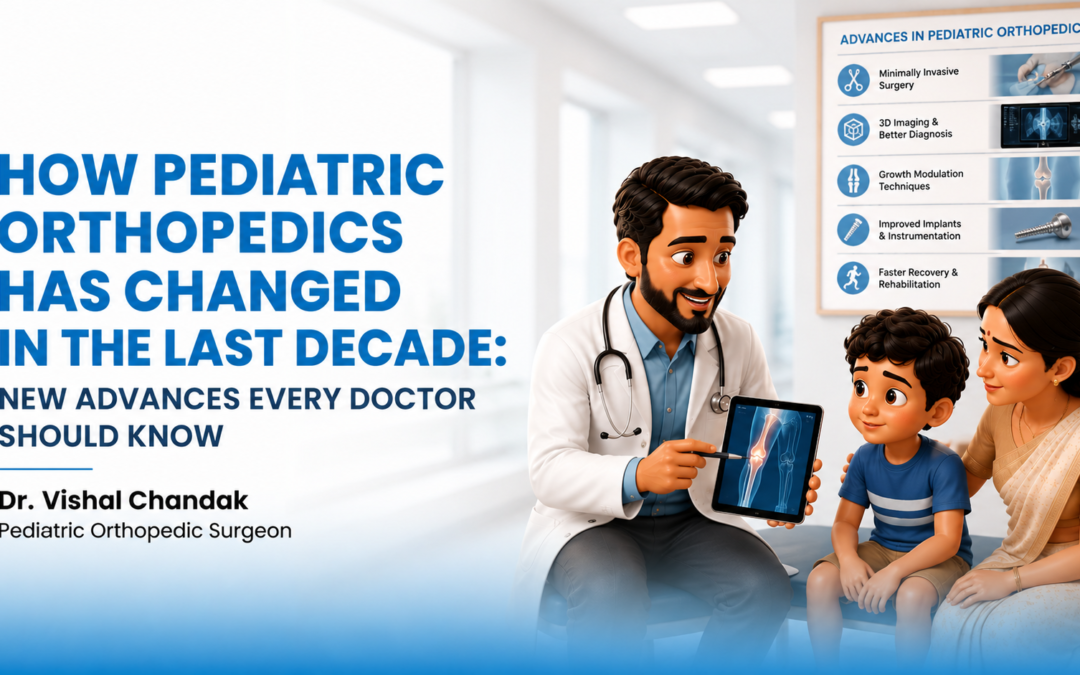
Advances in imaging, surgical techniques, growth modulation, rehabilitation, and patient-centered care have transformed how pediatric orthopedic specialists diagnose and treat musculoskeletal conditions in children.
For parents, these developments mean earlier diagnosis, more precise treatment, faster recovery, and better long-term outcomes.
For healthcare professionals, staying updated with modern pediatric orthopedic advancements is essential to providing the highest standard of care.
As a pediatric orthopedic surgeon, one of the most exciting aspects of the specialty is witnessing how rapidly treatment options continue to evolve.
Let’s explore some of the most important changes that have shaped pediatric orthopedics over the last decade.
Why Pediatric Orthopedics Is Different from Adult Orthopedics
Children are not simply small adults.
Their bones are actively growing, growth plates remain open, and their musculoskeletal system is constantly changing.
Because of this, pediatric orthopedic treatment must account for:
- Future growth potential
- Bone remodeling capacity
- Growth plate preservation
- Functional development
- Long-term mobility
Modern pediatric orthopedic care increasingly focuses on preserving growth while correcting deformities and restoring function.
Earlier Diagnosis Through Advanced Imaging
One of the biggest improvements has been the ability to identify orthopedic problems much earlier.
Modern imaging techniques allow specialists to evaluate conditions with greater precision. Improved MRI Technology
MRI scans now provide detailed visualization of:
- Growth plates
- Cartilage
- Soft tissues
- Ligaments
- Early bone abnormalities
This helps diagnose conditions before significant damage occurs.
Low-Dose Imaging Systems
Reducing radiation exposure has become a major priority in pediatric care. Advanced low-dose imaging technologies now allow safer monitoring of:
- Scoliosis
- Limb deformities
- Growth-related disorders
Children who require repeated imaging benefit significantly from these advances.
Growth Modulation Has Reduced the Need for Major Surgery
Traditionally, significant limb deformities often required corrective osteotomy procedures. Today, growth modulation techniques have changed that approach for many children. What Is Growth Modulation?
Growth modulation uses a child’s remaining growth potential to gradually correct alignment problems.
It is commonly used for:
- Knock knees
- Bow legs
- Angular deformities
- Growth-related limb alignment issues
In appropriate patients, this approach can reduce the need for more extensive surgery later
Better Treatment for Scoliosis
Scoliosis management has advanced significantly over the last decade. Earlier Detection
Improved awareness allows earlier identification of spinal curvature.
Advanced Bracing Techniques
Modern scoliosis braces are:
- More effective
- Better fitted
- More comfortable
- Easier for children to tolerate
Improved Surgical Planning
For children requiring surgery, advanced planning tools allow more precise correction while preserving spinal balance and function.
These improvements have enhanced outcomes and quality of life for many patients with scoliosis.
Minimally Invasive Surgical Techniques
The trend toward minimally invasive surgery has influenced pediatric orthopedics as well. Compared with traditional approaches, minimally invasive techniques may offer:
- Smaller incisions
- Reduced tissue disruption
- Less postoperative discomfort
- Faster recovery
- Improved cosmetic outcomes
Not every condition can be treated minimally invasively, but advances in surgical technology have expanded these options considerably.
Improved Care for Sports Injuries in Children
Youth sports participation continues to increase worldwide.
As a result, pediatric sports medicine has become a rapidly growing area within orthopedic care. Modern approaches emphasize:
Early Injury Recognition
Conditions such as:
- ACL injuries
- Meniscus injuries
- Growth plate injuries
- Overuse syndromes
are now diagnosed more accurately.
Sport-Specific Rehabilitation
Rehabilitation programs are increasingly tailored to the individual athlete and sport. Safe Return-to-Play Protocols
Structured guidelines help reduce reinjury risk and improve recovery outcomes.
Better Understanding of Growth Plate Injuries
Growth plates are among the most unique aspects of pediatric orthopedics.
Injuries involving growth plates require specialized evaluation because they can affect future bone development.
Over the past decade, specialists have gained a better understanding of:
- Growth plate fracture patterns
- Long-term growth monitoring
- Early intervention strategies
- Risk factors for growth disturbances
This knowledge has improved both treatment and long-term follow-up.
Advances in Pediatric Fracture Management
Many childhood fractures that once required extensive immobilization or surgery can now be managed more effectively.
Recent advances include:
Improved Casting Techniques
Modern casting materials provide:
- Better comfort
- Reduced weight
- Improved durability
Enhanced Surgical Fixation
When surgery is necessary, improved implants and techniques allow stable fixation while minimizing impact on growth plates.
Faster Rehabilitation
Early mobilization strategies help children regain function sooner when appropriate.
3D Planning and Personalized Treatment
Technology has significantly improved surgical planning.
Three-dimensional imaging allows surgeons to:
- Visualize complex deformities
- Plan corrective procedures
- Improve surgical precision
- Customize treatment approaches
As personalized medicine continues to evolve, treatment plans increasingly reflect each child’s unique anatomy and growth potential.
Greater Focus on Non-Surgical Treatment
In many children, yes.
Physiological bow legs often improve naturally as growth continues.
Parents may notice gradual straightening over several months or years. This process requires patience.
Because correction occurs gradually, immediate changes should not be expected. Regular follow-up allows the child’s progress to be monitored appropriately.
The Bottom Line
The last decade has brought remarkable progress in pediatric orthopedics.
From advanced imaging and growth modulation techniques to minimally invasive surgery and personalized treatment planning, today’s children benefit from more precise and effective orthopedic care than ever before.
As technology and research continue to evolve, the future of pediatric orthopedics will likely focus even more on early diagnosis, growth preservation, injury prevention, and individualized treatment.
For parents and healthcare professionals alike, understanding these advances helps ensure that children receive the best possible care during their most important years of growth and development.