
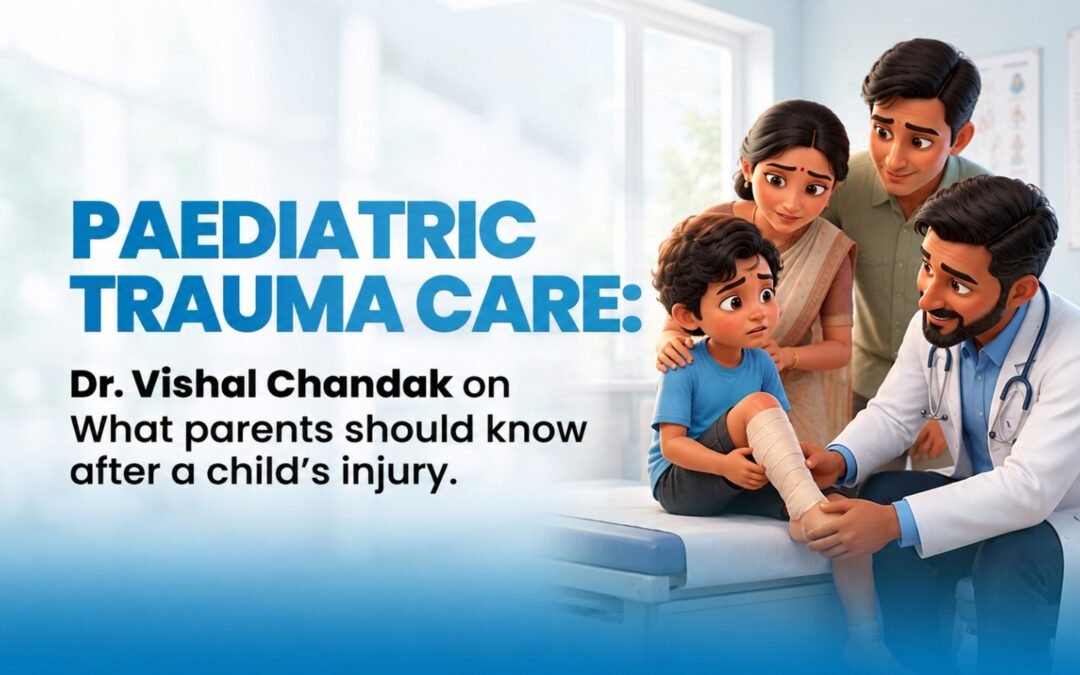
Your child falls. They cry. They get up. And then comes the question: “Do we need to see a doctor?”
Children are naturally active — running, cycling, playing sports, climbing and exploring. Minor bumps and falls are part of growing up. But some pediatric injuries need more than an ice pack and rest.
Knowing what to look for can make a big difference.
What Is Pediatric Trauma?
Pediatric trauma refers to injuries caused by events such as falls, road accidents, sports injuries or other impacts.
Common injuries in children include:
- Fractures
- Dislocations
- Sprains and ligament injuries
- Growth plate injuries
- Head or spinal injuries
- Muscle and soft-tissue injuries
Children are not simply “small adults.” Their bones are still growing, and some injuries can involve the growth plate — an area responsible for bone growth.
How Do You Know If a Child Has a Fracture?
A child may have a fracture even if there is no obvious deformity.
Watch for:
- Significant swelling
- Severe or persistent pain
- Bruising
- Difficulty moving the injured limb
- Refusal to walk or put weight on the limb
- Abnormal positioning of the arm or leg
- Pain that continues after the initial injury
If these symptoms occur after a fall or impact, an orthopaedic evaluation for children may be appropriate.
Why Growth Plate Injuries Need Attention
A child’s growing bone has areas that don’t exist in the same way in adults.
A growth plate injury in children may sometimes be difficult to identify initially. Proper assessment helps determine the type and severity of the injury and whether follow-up is required.
This is one reason why a child’s fracture should not automatically be treated exactly like an adult fracture.
What About Sports Injuries?
From football and cricket to cycling and gymnastics, young athletes can experience sports injuries in children.
A child who repeatedly plays through pain may turn a manageable problem into a longer recovery.
Pain, swelling or reduced movement after sports should not simply be ignored because the child “wants to keep playing.”
When Is Emergency Care Needed?
Seek urgent medical attention after a serious injury, particularly if the child has:
- Loss of consciousness
- Breathing difficulty
- Severe bleeding
- Significant deformity
- Severe or rapidly increasing pain
- Numbness or loss of sensation
- Inability to move a limb
- Inability to bear weight after a significant injury
For suspected serious trauma, emergency medical services should take priority.
The Goal of Pediatric Trauma Care
Treating a child’s injury isn’t only about getting them pain-free today.
The aim is to protect function, support healing and consider the child’s ongoing growth and development.
With the right assessment and treatment, many childhood injuries can heal well and children can safely return to the activities they love.
Remember
After an injury, don’t just ask, “Does my child look okay?” Ask, “Is my child moving normally?”
If pain, swelling, restricted movement or difficulty walking persists after an injury, consider an evaluation by a pediatric orthopedic specialist.
Disclaimer: This blog is for general awareness and does not replace emergency medical care or personalised medical advice. Serious injuries should be assessed promptly by an appropriate healthcare professional.