
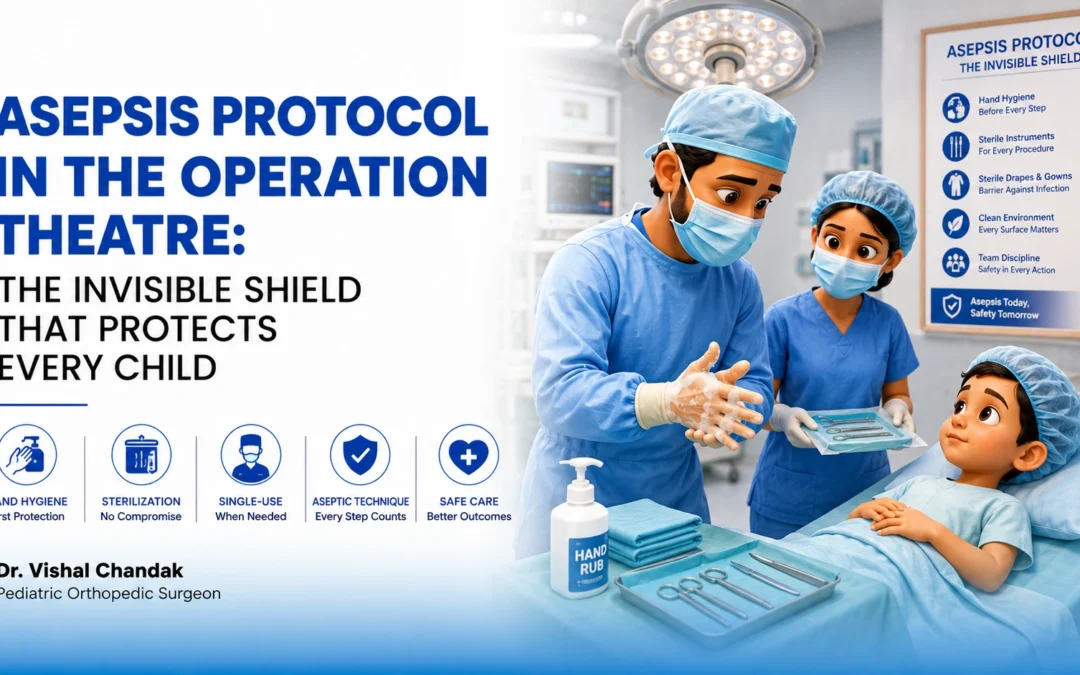
When parents think about surgery, they usually focus on the surgeon, the operation itself, and how long the recovery will take. But there’s something equally important happening behind the scenes—something you can’t see, yet it plays a massive role in your child’s safety.
It’s called the asepsis protocol.
From the moment a child enters the operation theatre (OT) until the surgery is complete, every step is designed to prevent germs from entering the surgical site. These strict infection-control practices are one of the biggest reasons surgeries today are safer than ever before.
Let’s walk through what an asepsis protocol is, why it matters, and how it protects your child during surgery.
What Does “Asepsis” Mean?
The word asepsis simply means keeping an environment free from harmful microorganisms like bacteria, viruses, fungi, and other germs.
In an operation theatre, the goal is straightforward:
Prevent germs from entering the surgical wound and causing an infection. It sounds simple, but achieving this requires careful planning, teamwork, and strict discipline.
Why Is Asepsis So Important?
Even a successful surgery can become complicated if the surgical wound gets infected. A surgical site infection can lead to:
- Delayed healing
- Increased pain
- Longer hospital stays
- Additional medications
- Repeat surgeries in severe cases
- Higher treatment costs
Fortunately, most surgical infections can be prevented when proper aseptic protocols are followed consistently.
The Operation Theatre Is Designed to Prevent Infection
An operation theatre isn’t just another hospital room. Every aspect of its design helps reduce infection risk. This includes:
- Controlled air circulation
- Specialized ventilation systems
- Strict entry protocols
- Sterile equipment
- Dedicated cleaning schedules
- Restricted movement inside the OT
Even the number of people inside the operation theatre is carefully controlled to reduce contamination.
The Asepsis Protocol Begins Before Surgery
Many people assume aseptic precautions start inside the OT. In reality, they begin much earlier.
- Preoperative Assessment
Doctors first ensure that the child is healthy enough for surgery. If the child has:
- Fever
- Active infections
- Skin infections near the surgical site
the surgery may be postponed to reduce the risk of complications.
- Skin Preparation
The skin naturally contains bacteria. Before surgery, the surgical area is cleaned using special antiseptic solutions that significantly reduce the number of germs on the skin. This simple step is one of the most effective ways to prevent infections.
- Hand Hygiene
One of the most powerful infection-control measures is also one of the simplest. Everyone involved in the surgery performs meticulous hand hygiene. Surgeons and OT staff follow a surgical hand scrub that lasts several minutes using antiseptic solutions before putting on sterile gloves.
Sterile Clothing Matters More Than You Think
Inside the operation theatre, you’ll notice the surgical team wearing:
- Sterile gowns
- Sterile gloves
- Surgical masks
- Head covers
- Shoe covers
These aren’t just uniforms—they create protective barriers that prevent germs from reaching the patient. Even a small break in sterility, such as touching a non-sterile surface, requires immediate corrective action.
Every Instrument Is Sterilized
Every surgical instrument used during the procedure undergoes a strict sterilization process before it enters the OT. Depending on the equipment, sterilization may involve:
- Steam sterilization (autoclaving)
- Low-temperature sterilization for delicate instruments
- Sterile packaging until use
Nothing is used unless it meets sterilization standards.
Creating a Sterile Field
Once the child is positioned for surgery, sterile drapes are placed around the surgical area. This creates a sterile field—a protected zone where only sterile instruments and gloved hands are allowed. Maintaining this field throughout the procedure is essential for preventing contamination.
Antibiotics Are Used Wisely
For many surgeries, antibiotics are given before the first incision, not after. This helps ensure that adequate antibiotic levels are present in the body when surgery begins. However, antibiotics are not a substitute for proper aseptic technique—they are an additional layer of protection.
Teamwork Keeps the OT Safe
Maintaining asepsis isn’t the responsibility of just one person.
It involves the coordinated efforts of:
- Pediatric orthopaedic surgeons
- Anaesthesiologists
- Scrub nurses
- OT technicians
- Circulating nurses
- Sterilization teams
Every team member follows standardized protocols to keep the surgical environment safe.
How Modern Pediatric Operation Theatres Improve Safety
Today’s pediatric operation theatres are specifically designed to meet the unique needs of children. Many hospitals now incorporate:
- Advanced sterilization systems
- Laminar airflow technology
- Dedicated pediatric surgical instruments
- Strict infection surveillance programs
- Regular staff training and quality audits
These measures have significantly reduced the risk of surgical site infections and improved outcomes.
Final Thoughts
The asepsis protocol is one of the most important yet least visible parts of any surgery. From sterilizing instruments and preparing the surgical site to maintaining a sterile environment throughout the procedure, every step is carefully planned to protect your child from infection.
When you choose a hospital that follows rigorous aseptic protocols and an experienced pediatric orthopaedic team, you’re choosing an environment where safety is a priority long before the first incision is made.