
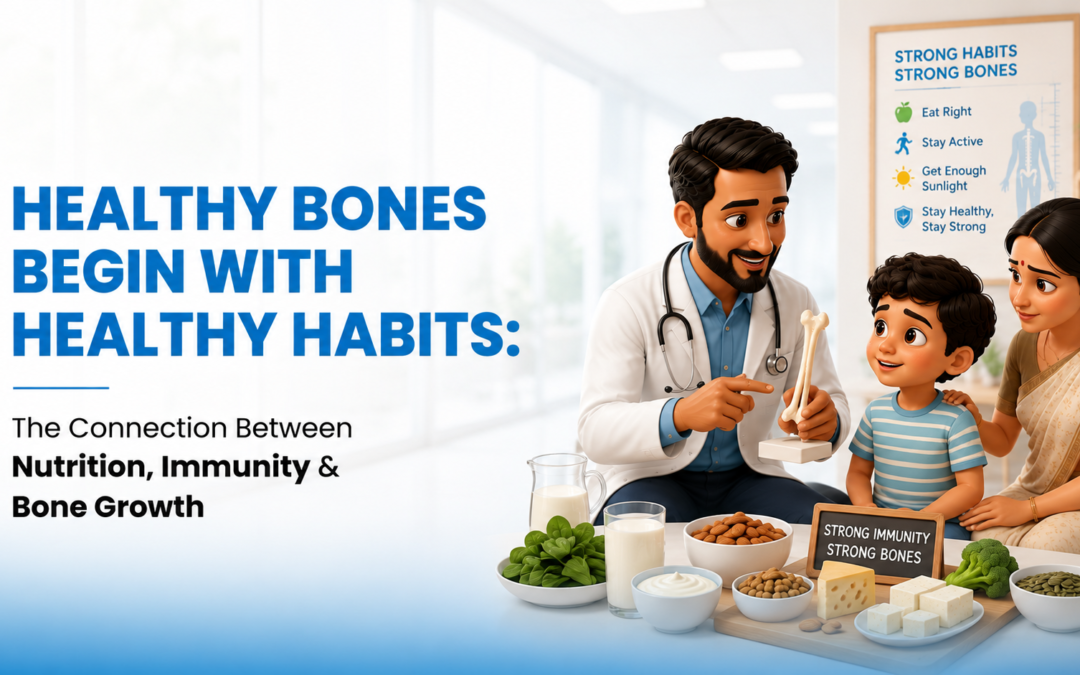
When parents think about keeping their children healthy, they often focus on immunity. Questions like these are common:
“How can I improve my child’s immunity?”
“What foods help children stay healthy?”
“Why does my child fall sick frequently?”
At the same time, many parents worry about growth, height, posture, and bone health. What many don’t realize is that these concerns are closely connected.
A child’s nutrition, immunity, and bone growth are not separate systems working independently. They constantly influence one another. Poor nutrition can affect immunity. Frequent illness can impact growth. Nutritional deficiencies can weaken bones and muscles.
As a pediatric orthopedic surgeon, I often tell parents that strong bones are built long before a child experiences a fracture or develops a growth concern. Healthy bones are the result of daily habits that support overall development.
Let’s explore how nutrition, immunity, and bone growth work together—and what parents can do to support all three.
Why Bone Health Starts Earlier Than Most Parents Think
Bones are living tissues that grow continuously throughout childhood and adolescence. During these years, the body is constantly:
- Building new bone tissue
- Increasing bone density
- Strengthening muscles
- Developing joints
- Supporting height growth
In fact, most bone mass is developed before adulthood.
The stronger the foundation during childhood, the better the chances of maintaining healthy bones later in life.
This is why nutrition and lifestyle choices during childhood have such a lasting impact.
The Link Between Nutrition and Bone Growth
Bones require a steady supply of nutrients to grow properly.
When children consistently receive balanced nutrition, their bodies have the resources needed to support:
- Healthy height growth
- Strong bones
- Muscle development
- Physical activity
- Injury recovery
Conversely, poor nutrition may affect growth and overall musculoskeletal development. Several nutrients play a particularly important role.
Calcium
Calcium is one of the primary minerals found in bones.
Good sources include:
- Milk
- Curd
- Paneer
- Cheese
- Ragi
- Sesame seeds
- Tofu
- Green leafy vegetables
Adequate calcium intake supports bone density and skeletal development. Vitamin D
Vitamin D helps the body absorb calcium efficiently.
Without enough Vitamin D, even adequate calcium intake may not be fully utilized. Sources include:
- Sunlight exposure
- Egg yolk
- Fatty fish
- Fortified foods
Vitamin D deficiency in children remains surprisingly common and can contribute to weak bones and musculoskeletal discomfort.
Protein
Protein is often associated with muscles, but it is equally important for bone development. Protein supports:
- Bone structure
- Muscle growth
- Tissue repair
- Fracture healing
- Physical performance
Children who consume adequate protein generally have better support for growth and development.
How Nutrition Influences Immunity
The immune system relies heavily on proper nutrition.
When children do not receive sufficient nutrients, their bodies may struggle to function optimally. Key nutrients that support immunity include:
Protein
Immune cells require protein for development and function.
Children with inadequate protein intake may have reduced ability to recover from infections. Vitamin D
Research increasingly highlights Vitamin D’s role in immune regulation.
Low Vitamin D levels have been associated with increased susceptibility to infections. Zinc
Zinc supports immune cell function and wound healing.
Sources include:
- Lentils
- Nuts
- Seeds
- Dairy products
Iron
Iron supports oxygen transport and overall health.
Iron deficiency can contribute to fatigue and reduced physical performance.
A varied and balanced diet provides the nutrients necessary to support both immunity and growth.
How Frequent Illness Can Affect Growth
Children who experience repeated illnesses may face challenges beyond temporary discomfort. Frequent illness can:
- Reduce appetite
- Limit nutrient intake
- Increase nutritional requirements
- Affect physical activity
- Slow recovery
- Impact overall growth patterns
When this cycle continues over time, it may influence weight gain, muscle development, and overall growth.
This is why maintaining good nutrition is important even during periods of illness.
The Role of Physical Activity in Bone Health and Immunity
Nutrition alone cannot build strong bones.
Physical activity plays an equally important role.
Activities such as:
- Running
- Jumping
- Cycling
- Swimming
- Outdoor play
- Sports participation
help stimulate healthy bone development and muscle strength.
Regular activity also contributes to overall well-being and supports healthy immune function.
Children who remain physically active often develop stronger musculoskeletal systems compared to those who spend most of their time sedentary.
Why Outdoor Play Matters More Than Ever
Modern childhood looks very different from previous generations.
Many children spend significant time:
- Indoors
- Using screens
- Studying
- Engaging in sedentary activities
Reduced outdoor play can contribute to:
- Lower physical activity levels
- Reduced sunlight exposure
- Vitamin D deficiency
- Poor muscle strength
Encouraging outdoor activity supports both physical development and healthy lifestyle habits.
Sleep: The Often Forgotten Growth Factor
Parents frequently focus on food and exercise but overlook sleep.
Growth hormone is released primarily during sleep.
Adequate sleep supports:
- Bone growth
- Muscle recovery
- Immune function
- Cognitive development
- Physical performance
Children who consistently get insufficient sleep may struggle to achieve their full growth potential.
Healthy sleep routines should be considered a fundamental part of bone health.
Habits That Can Negatively Affect Bone Growth
Certain lifestyle habits may interfere with healthy development.
These include:
Excessive Processed Foods
Highly processed foods often provide calories without essential nutrients. Sugary Drinks
Frequent consumption may displace healthier nutritional choices.
Sedentary Lifestyle
Insufficient physical activity can affect muscle and bone development. Excessive Screen Time
Poor posture and reduced activity often accompany prolonged screen use. Skipping Meals
Missing meals can reduce overall nutrient intake during critical growth years.
Signs Your Child’s Nutrition May Need Attention
Parents should consider professional evaluation if they notice:
- Poor weight gain
- Delayed growth
- Frequent fractures
- Persistent fatigue
- Muscle weakness
- Recurrent infections
- Bone pain
- Poor appetite
- Reduced participation in physical activities
Early identification of nutritional concerns often allows timely intervention.
Building Healthy Habits for Lifelong Bone Health
Strong bones are not built through supplements alone.
They are built through consistent daily habits.
Parents can support healthy growth by encouraging:
- Balanced meals
- Adequate protein intake
- Calcium-rich foods
- Healthy Vitamin D levels
- Regular outdoor play
- Sports participation
- Sufficient sleep
- Proper hydration
- Limited screen time
Small habits practiced consistently often have the greatest long-term impact.
The Bottom Line
A child’s nutrition, immunity, and bone growth are deeply connected.
Healthy bones require much more than calcium alone. They depend on a combination of:
- Balanced nutrition
- Adequate protein
- Vitamin D
- Physical activity
- Outdoor play
- Quality sleep
- Healthy lifestyle habits
When these foundations are in place, children are better equipped to develop strong bones, resilient immune systems, healthy muscles, and the physical confidence needed for an active life.
Healthy bones truly begin with healthy habits—and the earlier those habits start, the greater their impact for years to come.