
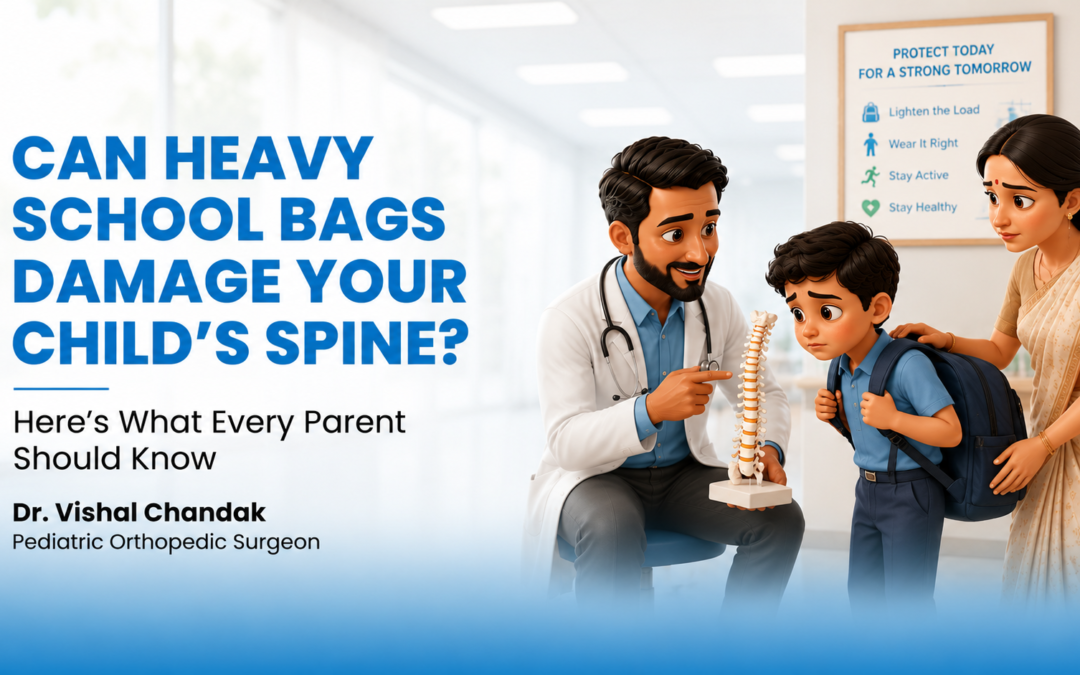
Every school morning, the routine looks familiar.
A child lifts a school bag, adjusts the straps, and heads off to school.
But many parents pause and wonder:
“Is this bag too heavy?”
“Can carrying so much weight damage my child’s spine?”
“Could this affect posture, growth, or back health in the future?”
These concerns are becoming increasingly common.
With textbooks, notebooks, lunch boxes, water bottles, sports equipment, and electronic devices all packed into one bag, many children carry far more weight than their growing bodies should handle.
As a pediatric orthopedic surgeon, I frequently see parents worried about back pain in children, poor posture, neck pain, shoulder discomfort, and spinal health.
The good news is that a school bag does not usually cause permanent spinal damage in an otherwise healthy child.
However, carrying excessive weight regularly can contribute to pain, poor posture habits, muscle strain, and discomfort that should not be ignored.
Let’s understand what parents need to know.
Why Children’s Spines Are Different from Adults’
A child’s musculoskeletal system is still developing.
During growth years:
- Bones are growing rapidly
- Muscles are strengthening
- Ligaments remain flexible
- Postural habits are being formed
Because children are still developing, repetitive stress from poorly designed or excessively heavy school bags can place unnecessary strain on the neck, shoulders, and back.
While the spine is remarkably resilient, it is important to encourage healthy habits during these formative years.
How Heavy Is Too Heavy?
One of the most widely accepted recommendations is that a school bag should weigh
no more than 10–15% of a child’s body weight.
For example:
Child’s Weight Recommended Bag
Weight
20 kg 2–3 kg
30 kg 3–4.5 kg
40 kg 4–6 kg
Many school bags exceed these limits, especially in higher grades.
When children consistently carry excessive loads, their bodies often compensate by altering posture and walking mechanics.
Signs Your Child’s School Bag May Be Too Heavy
Parents should watch for warning signs such as:
- Leaning forward while walking
- Rounded shoulders
- Neck pain
- Shoulder pain
- Upper back pain
- Lower back pain
- Red marks from shoulder straps
- Frequent complaints of fatigue
- Difficulty lifting the bag
- Poor posture after school
These symptoms suggest that the load may be placing excessive stress on muscles and joints.
Can Heavy School Bags Cause Permanent Spine Damage?
This is perhaps the biggest concern among parents.
Current evidence suggests that school bags alone are unlikely to cause permanent spinal deformities in healthy children.
Heavy bags do not typically cause:
- Scoliosis
- Permanent curvature of the spine
- Stunted growth
- Structural spinal damage
However, repeatedly carrying excessive weight can contribute to:
- Muscle strain
- Neck pain
- Shoulder discomfort
- Back pain
- Fatigue
- Temporary postural changes
These problems can affect comfort, physical activity, and quality of life if left unaddressed.
The Link Between Heavy School Bags and Back Pain
Back pain in children is becoming increasingly common.
Several factors contribute to this trend:
Excessive Bag Weight
The heavier the load, the harder the muscles must work to maintain balance.
Poor Carrying Technique
Many children carry bags on only one shoulder.
This creates uneven loading and increases strain on one side of the body.
Reduced Physical Activity
Weak core muscles may struggle to support prolonged carrying of heavy loads.
Increased Screen Time
Children who spend long hours sitting and using devices often develop poor posture, which can worsen discomfort associated with heavy bags.
Does Carrying a Heavy Bag Affect Posture?
Yes, temporarily.
When a bag is too heavy, children often compensate by:
- Leaning forward
- Arching the lower back
- Elevating their shoulders
- Walking differently
Over time, these habits may contribute to poor posture patterns.
Although these postural changes are usually reversible, encouraging healthy posture early is important for long-term musculoskeletal health.
What Is the Best School Bag for Children?
Not all bags are created equal.
Parents should look for the following features:
Wide Padded Shoulder Straps
These distribute weight more evenly and reduce pressure on the shoulders.
Two Shoulder Straps
Children should always use both straps.
One-shoulder carrying significantly increases stress on the neck and back.
Padded Back Support
Additional cushioning improves comfort and support.
Multiple Compartments
This helps distribute weight more evenly throughout the bag.
Adjustable Straps
The bag should fit snugly against the child’s back.
A bag hanging low increases strain on the spine.
Lightweight Design
A heavy empty bag becomes an even bigger burden once filled.
How Should Children Carry Their School Bags?
Proper carrying technique can make a significant difference.
Teach children to:
- Use both shoulder straps
- Adjust straps to keep the bag close to the body
- Place heavier items closest to the back
- Avoid carrying unnecessary books
- Lift the bag using both hands
- Use lockers or storage spaces when available
Small adjustments often reduce discomfort substantially.
Can Heavy School Bags Cause Neck Pain?
Yes.
When a child carries excessive weight, neck muscles work harder to stabilize the head and shoulders.
This can lead to:
- Neck stiffness
- Muscle fatigue
- Shoulder tension
- Headaches in some children
Persistent neck pain should never be dismissed as a normal consequence of school.
What About Children Already Having Spine Problems?
Children with existing orthopedic conditions may require special attention. Examples include:
- Scoliosis
- Kyphosis
- Neuromuscular conditions
- Previous spinal surgery
- Significant posture abnormalities
These children may benefit from individualized recommendations from a pediatric orthopedic specialist.
The Bottom Line
Heavy school bags are unlikely to permanently damage a healthy child’s spine. However, carrying excessive weight regularly can contribute to:
- Back pain
- Neck pain
- Shoulder strain
- Fatigue
- Poor posture habits
Parents can significantly reduce these risks by choosing the right bag, ensuring proper carrying techniques, encouraging physical activity, and monitoring symptoms.
A child’s spine is designed to grow strong and resilient—but healthy habits today help protect musculoskeletal health for years to come.