
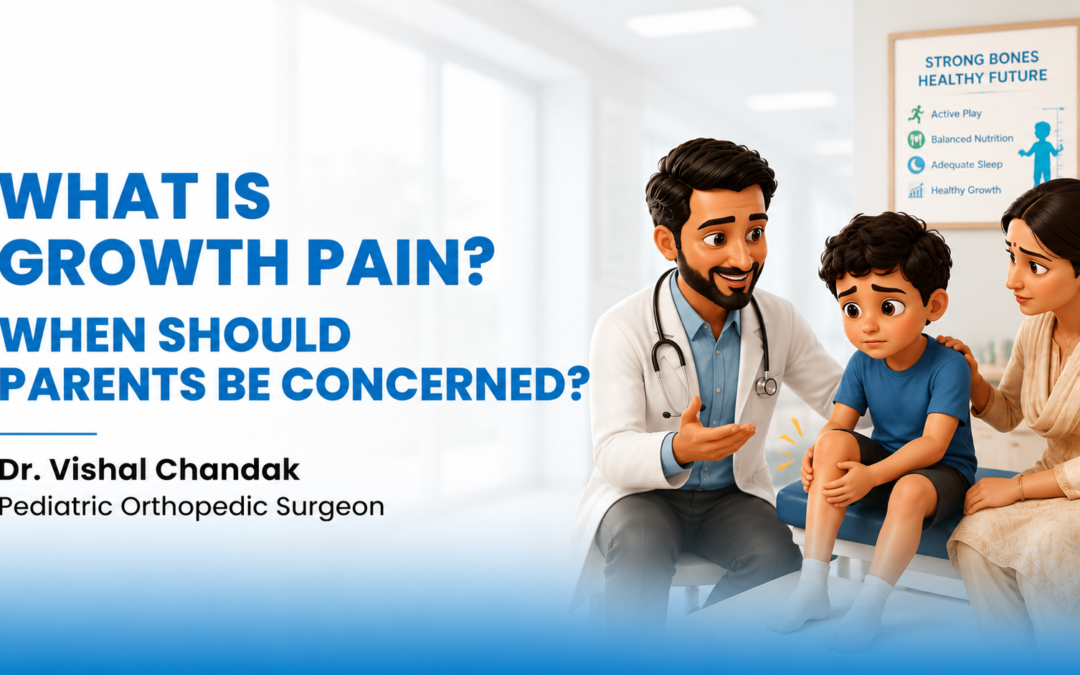
Your child wakes up in the middle of the night crying because of leg pain. The next morning, they are running around normally as if nothing happened. A few weeks later, the same thing happens again.
Naturally, parents begin to worry.
“Is my child lacking calcium?”
“Could this be a bone problem?”
“Is it related to growth?”
“Should we get an X-ray done?”
One of the most common reasons for intermittent leg pain in children is something known as growth pains. While growth pains are generally harmless, not every leg pain should be dismissed as “normal growth.”
Understanding the difference can help parents know when reassurance is enough and when a medical evaluation is necessary.
As a pediatric orthopedic surgeon, I often see children whose symptoms are either unnecessarily causing anxiety or, in some cases, being ignored when they deserve attention.
Let’s understand what growth pains really are.
What Are Growth Pains?
Growth pains are recurring episodes of muscle or limb pain that occur in otherwise healthy children.
Interestingly, despite the name, growth pains have not been definitively linked to actual growth spurts.
However, the term remains widely used because these pains commonly occur during childhood growth years.
Growth pains are among the most frequent causes of leg pain in children and are usually considered a normal part of childhood.
They typically affect children between:
3 to 12 years of age
The pain often occurs after a physically active day and usually resolves on its own.
Where Do Growth Pains Usually Occur?
Growth pains most commonly affect:
- Both legs
- Calves
- Thighs
- Behind the knees
Unlike an injury, growth pains generally occur on both sides rather than a single isolated location.
Children usually describe them as:
- Aching pain
- Throbbing discomfort
- Deep soreness in the legs
The pain can range from mild to severe enough to wake a child from sleep.
Common Signs of Growth Pains
Parents may notice a predictable pattern.
Typical Features Include:
- Pain occurs in the evening or at night
- Child wakes up because of discomfort
- Symptoms improve by morning
- Pain affects both legs
- No swelling or redness
- No limping during the day
- Child remains active and playful
- Normal physical examination
One of the hallmark signs is that children are completely normal between episodes.
What Causes Growth Pains?
The exact cause remains unclear.
Several theories have been proposed, including:
Increased Physical Activity
Children who run, jump, climb, and participate in sports may experience muscle fatigue that contributes to discomfort later in the day.
Muscle Overuse
Active muscles can become tired after long periods of physical activity.
Lower Pain Threshold
Some research suggests children with growth pains may have a heightened sensitivity to normal muscle discomfort.
Joint Hypermobility
Children who are naturally more flexible may experience increased musculoskeletal aches.
Although growth itself may not directly cause the pain, these factors can contribute to the symptoms commonly labeled as growth pains.
How Long Do Growth Pains Last?
Growth pains tend to come and go.
A child may experience:
- Several episodes in one week
- No symptoms for months
- Recurrence during active periods
Most children eventually outgrow these symptoms without any long-term complications. Growth pains do not cause:
- Bone damage
- Joint deformity
- Growth problems
- Permanent disability
Can Calcium Deficiency Cause Growth Pains?
This is one of the most common misconceptions among parents.
Not all leg pain is caused by calcium deficiency.
Similarly, growth pains do not automatically mean your child needs calcium supplements. However, nutritional deficiencies such as:
- Vitamin D deficiency
- Low calcium intake
- Poor overall nutrition
can contribute to musculoskeletal discomfort and should be evaluated when symptoms are persistent.
Blindly starting supplements without proper assessment is usually not recommended.
When Is Leg Pain NOT a Growth Pain?
This is the most important question for parents.
While growth pains are common, certain symptoms may indicate an underlying orthopedic or medical condition that requires further evaluation.
Red Flag #1: Persistent Pain During the Day
Growth pains usually improve by morning.
If pain continues throughout the day, it deserves attention.
Red Flag #2: Limping
A child who develops:
- A limp
- Difficulty walking
- Avoidance of activity
should be evaluated promptly.
Red Flag #3: Pain in One Leg Only
Growth pains generally affect both legs.
Persistent pain on one side may suggest:
- Injury
- Infection
- Joint problems
- Other orthopedic conditions
Red Flag #4: Swelling or Redness
Visible changes such as:
- Swelling
- Warmth
- Redness
are not typical of growth pains.
Red Flag #5: Fever with Leg Pain
Fever combined with bone or joint pain requires urgent medical evaluation.
Red Flag #6: Night Pain That Continues to Worsen
Repeated severe night pain that becomes progressively worse should never be ignored.
Red Flag #7: Recurrent Fractures
Children experiencing frequent fractures may have underlying bone health concerns that require assessment.
Red Flag #8: Delayed Growth or Weakness
Pain accompanied by:
- Poor growth
- Muscle weakness
- Fatigue
may indicate nutritional or medical issues.
Conditions That Can Mimic Growth Pains
Several pediatric orthopedic conditions may initially appear similar to growth pains. These include:
- Vitamin D deficiency in children
- Flat feet in children
- Juvenile arthritis
- Sports injuries
- Overuse syndromes
- Stress fractures
- Hip disorders in children
- Bone infections
- Pediatric bone tumors (rare)
This is why persistent symptoms should never be self-diagnosed.
How Are Growth Pains Diagnosed?
There is no specific blood test or scan that confirms growth pains.
Diagnosis is usually based on:
- Medical history
- Symptom pattern
- Physical examination
Investigations such as:
- X-rays
- Blood tests
- Vitamin D testing
may be recommended if symptoms are unusual or red flags are present. The goal is to rule out more serious causes of pain.
How Can Parents Help a Child with Growth Pains?
Fortunately, most children improve with simple measures.
Gentle Leg Massage
Massaging sore muscles often provides quick relief.
Warm Compress
A warm towel or heating pad can help relax muscles.
Stretching Exercises
Gentle stretching may reduce discomfort.
Adequate Hydration
Proper hydration supports muscle function.
Balanced Nutrition
Ensure sufficient intake of:
- Protein
- Calcium
- Vitamin D
- Fruits and vegetables
Encourage Physical Activity
Children should remain active unless advised otherwise.
Avoiding exercise completely is usually unnecessary.
The Bottom Line
Growth pains are one of the most common causes of leg pain in children and are usually a normal part of childhood.
They typically:
- Affect both legs
- Occur at night
- Improve by morning
- Do not interfere with daily activities
However, not every leg pain is a growth pain.
Persistent symptoms, limping, swelling, fever, weakness, or worsening pain should always be evaluated by a healthcare professional.
When it comes to a child’s growth and bone health, timely evaluation offers both reassurance and the opportunity to identify conditions that may need treatment.