
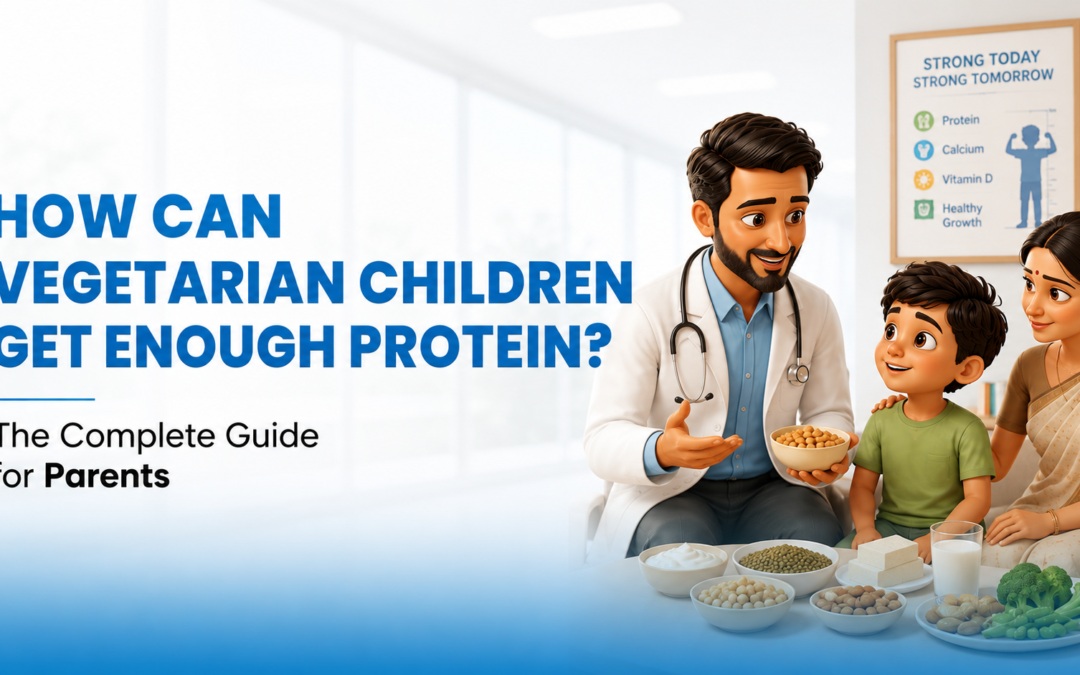
One of the most common questions parents ask in my clinic is:
“My child is vegetarian. Is he getting enough protein?”
With growing awareness about nutrition, fitness, immunity, and healthy growth, many parents worry that a vegetarian diet may not provide adequate protein for their child’s development.
The concern is understandable.
Protein plays a critical role in bone growth, muscle development, height gain, tissue repair, immunity, and overall childhood development. Yet there is a common misconception that protein can only come from eggs, chicken, fish, or meat.
The reality is quite different.
A well-planned vegetarian diet can provide all the protein a growing child needs. The key lies in understanding where protein comes from, how much your child requires, and how to create balanced meals that support healthy growth.
As a pediatric orthopedic surgeon, I often explain to parents that strong bones are not built by calcium alone. Protein is equally important for developing a healthy musculoskeletal system.
Let’s explore how vegetarian children can meet their daily protein needs naturally.
Why Protein Is So Important for Growing Children
Protein is often called the body’s building block—and for good reason.
Every growing child relies on protein to support:
- Bone development
- Muscle growth
- Height progression
- Tissue repair
- Hormone production
- Immune function
- Recovery from injuries
- Physical activity and sports performance
During childhood and adolescence, the body is constantly creating new tissues. Without adequate protein, growth and development may not occur optimally.
For pediatric orthopedic health, protein is especially important because bones are not made only of calcium and minerals. A significant part of bone structure consists of protein-based collagen, which provides flexibility and strength.
Signs Your Child May Not Be Getting Enough Protein
Severe protein deficiency is uncommon, but inadequate protein intake can sometimes contribute to:
- Poor weight gain
- Slow growth
- Reduced muscle mass
- Frequent fatigue
- Delayed recovery from illness
- Weakness during sports
- Increased susceptibility to infections
- Reduced appetite
- Slower healing after injuries
If parents notice persistent concerns related to growth, nutrition, or musculoskeletal development, a professional assessment is recommended.
How Much Protein Does a Child Need?
Protein requirements vary depending on age, growth stage, and activity level.
Generally, growing children require a steady intake of high-quality protein throughout the day rather than a large amount in a single meal.
Children involved in sports, athletics, dance, gymnastics, or other physically demanding activities may require additional attention to their protein intake.
Rather than focusing on supplements, parents should prioritize protein-rich foods distributed across breakfast, lunch, snacks, and dinner.
The Biggest Myth About Vegetarian Dietss
Many parents assume that vegetarian diets automatically cause protein deficiency. This is simply not true.
In fact, many Indian households regularly consume protein-rich vegetarian foods but may not recognize them as valuable protein sources.
The challenge is usually not the absence of protein foods.
The challenge is inadequate variety, poor meal planning, excessive reliance on refined carbohydrates, and insufficient protein at breakfast.
When planned correctly, vegetarian diets can fully support healthy growth, strong bones, and active lifestyles.
Best Vegetarian Protein Sources for Children
01. Milk and Dairy Products
Dairy remains one of the most effective protein sources for vegetarian children. Excellent options include:
- Milk
- Curd
- Paneer
- Greek yogurt
- Cheese (in moderation)
These foods provide both protein and calcium, making them particularly beneficial for bone health.
02. Lentils and Dal
Indian diets already include several protein-rich lentils.
Examples include:
- Moong dal
- Toor dal
- Masoor dal
- Urad dal
- Chana dal
Combining dal with rice creates a more complete protein profile, making it an excellent everyday meal for growing children.
03. Chickpeas and Legumes
Legumes provide protein, fiber, vitamins, and minerals.
Healthy options include:
- Chickpeas
- Rajma
- Black beans
- White beans
- Lobia
These can be incorporated into curries, salads, wraps, or snacks.
04. Soy Products
Soy is one of the highest-quality vegetarian protein sources available.
Protein-rich soy foods include:
- Tofu
- Soy milk
- Soy chunks
- Edamame
Soy protein contains essential amino acids that support muscle and bone development.
05. Nuts and Seeds
Nuts and seeds contribute both protein and healthy fats.
Good choices include:
- Almonds
- Peanuts
- Walnuts
- Pumpkin seeds
- Sunflower seeds
- Chia seeds
- Flaxseeds
These make excellent snacks and can be added to smoothies, porridge, or homemade energy bars.
06.Quinoa
Quinoa is increasingly popular because it contains all essential amino acids. It can be used in:
- Salads
- Porridge
- Khichdi variations
- Healthy lunch bowls
07. Ragi and Whole Grains
While grains are not the richest protein source, they contribute significantly when combined with legumes.
Examples include:
- Ragi
- Oats
- Whole wheat
- Millets
- Brown rice
These foods help create balanced meals that support growth and energy needs.
Simple High-Protein Vegetarian Meal Ideas
Many parents believe they need expensive supplements to improve protein intake. Often, simple dietary changes are enough.
Protein-Rich Breakfast Options
- Vegetable paneer paratha
- Besan chilla
- Moong dal chilla
- Greek yogurt with fruits
- Peanut butter whole wheat toast
- Oats with milk and nuts
Protein-Rich Lunch Options
- Dal with rice
- Rajma chawal
- Chole with roti
- Paneer wraps
- Quinoa vegetable bowl
Healthy Protein Snacks
- Roasted chana
- Sprouts chaat
- Peanut laddoo
- Yogurt
- Mixed nuts
Protein-Rich Dinner Options
- Dal khichdi
- Paneer curry
- Tofu stir fry
- Mixed bean curry
- Millet-based meals
Small improvements across multiple meals often have a bigger impact than a single protein supplement.
Are Protein Powders Necessary for Vegetarian Children?
This is one of the most frequently asked questions by parents.
For most healthy children, protein powders are not necessary.
A balanced vegetarian diet usually provides sufficient protein for normal growth and development.
Protein supplements may be considered in specific situations, such as:
- Poor dietary intake
- Underweight children
- Certain medical conditions
- Increased nutritional requirements
- Professional medical recommendation
Parents should avoid choosing protein powders solely based on advertisements or social media claims.
Whole foods remain the best source of nutrition.
Protein, Bone Health and Orthopedic Development
Many parents associate protein only with muscles.
However, protein also plays a major role in:
- Bone mineralization
- Fracture healing
- Muscle strength
- Posture
- Joint stability
- Physical performance
Children with inadequate nutrition may experience slower recovery after fractures or sports injuries.
Healthy protein intake supports overall pediatric orthopedic health and helps children remain active, strong, and resilient.
Common Mistakes Parents Make
Focusing Only on Milk
Milk is valuable, but it should not be the only protein source.
Children need variety.
Offering Carb-Heavy Meals
Meals dominated by bread, biscuits, noodles, or processed snacks often lack sufficient protein. Skipping Breakfast
Many children start the day with minimal protein intake.
Breakfast is one of the best opportunities to improve nutrition.
Depending on Supplements
Supplements cannot compensate for consistently poor eating habits.
Building healthy dietary patterns is more important than finding a quick fix.
When Should Parents Seek Medical Advice?
Consider consulting a pediatric orthopedic specialist or pediatrician if your child experiences:
- Poor growth
- Recurrent fractures
- Persistent weakness
- Bone pain
- Delayed physical development
- Difficulty participating in sports
- Nutritional concerns despite a balanced diet
Early evaluation can identify nutritional deficiencies and ensure healthy growth during critical developmental years.
The Bottom Line
Vegetarian children can absolutely get enough protein for healthy growth, strong bones, and active lifestyles.
The secret is not expensive supplements or trendy protein products.
It is a balanced diet that includes:
- Dairy products
- Lentils and dal
- Legumes
- Soy foods
- Nuts and seeds
- Whole grains
- Diverse, nutrient-rich meals
When combined with adequate calcium, Vitamin D, physical activity, and healthy lifestyle habits, these foods provide the nutritional foundation children need for lifelong musculoskeletal health.
Strong bones, healthy muscles, and optimal growth begin with consistent everyday nutrition—not shortcuts.