
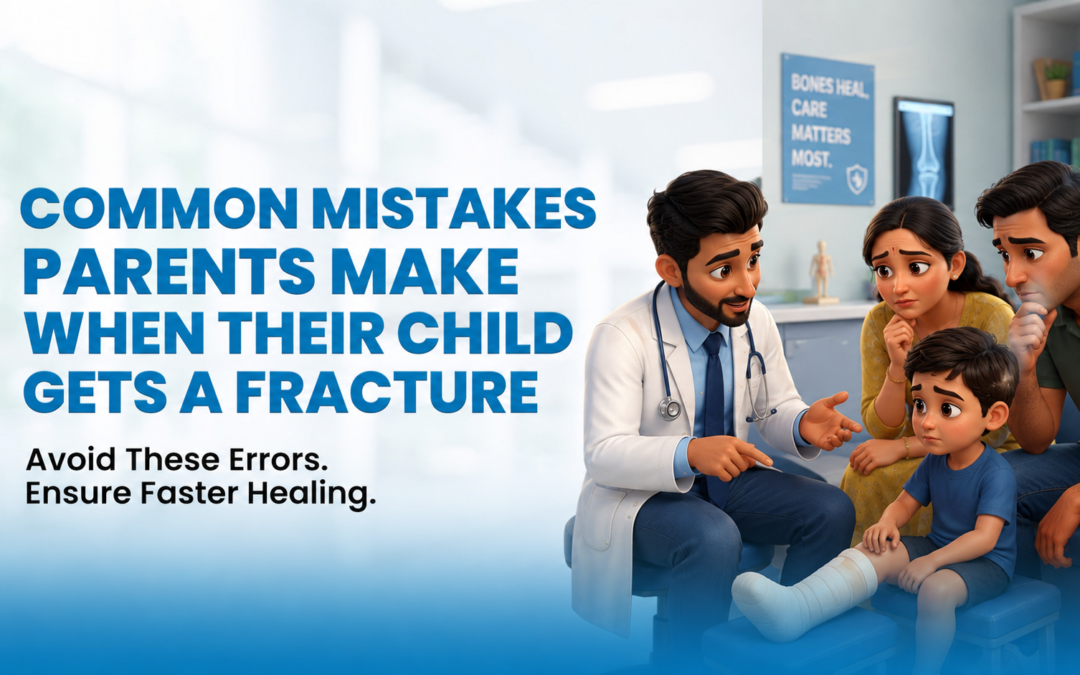
Frequently Asked Questions Answered by Dr. Vishal H. Chandak
Pediatric Orthopedic & Trauma Surgeon
Children are naturally active. Running, jumping, cycling, climbing, and sports are all a part of growing up. As a result, fractures in children are extremely common.
However, what often creates complications is not the fracture itself — but the mistakes made immediately after the injury.
Many parents unintentionally delay proper treatment by ignoring symptoms, trying home remedies, or assuming the injury is “minor.” In pediatric orthopedics, timing and proper management are extremely important because children’s bones are still growing.
In this detailed guide, Dr. Vishal Chandak discusses the most common mistakes parents make after a child suffers a fracture and explains how proper care can improve healing and prevent long-term complications.
How Do Parents Usually Identify a Fracture in Children?
Not every fracture causes obvious deformity.
In many cases, children may only complain of:
- Pain
- Swelling
- Difficulty moving the limb
- Avoiding use of the injured arm or leg
- Difficulty walking
- Tenderness near joints
Sometimes, especially in younger children, irritability and refusal to play may be the only signs.
This is why proper assessment after a fall or injury is extremely important.
Mistake 1: Assuming “It Is Just a Minor Injury”
This is one of the most common mistakes seen in fracture treatment in children.
Parents often assume:
- “The child is still walking, so it cannot be a fracture.”
- “There is no swelling, so it must be normal.”
- “Children recover quickly, so it will settle on its own.”
The reality is that many pediatric fractures are subtle initially.
Certain fractures, especially growth plate injuries in children, may not appear severe immediately but can affect future bone growth if neglected.
Mistake 2: Delaying an Orthopedic Consultation
Many parents wait several days before visiting a Pediatric Orthopedic Surgeon.
Delays can lead to:
- Increased swelling
- Improper alignment
- Delayed healing
- Difficulty in fracture correction
- Higher risk of complications
Early diagnosis allows:
- Proper immobilization
- Better pain management
- Correct bone alignment
- Faster recovery
In children, bones heal rapidly — but they also heal in the position they are left in.
Mistake 3: Excessive Massage or Home Remedies
After injuries, some families immediately:
- Massage the injured area
- Apply excessive pressure
- Use oils or local remedies
- Force movement
This can worsen:
- Swelling
- Pain
- Soft tissue damage
- Bleeding around the fracture
In suspected bone fractures in children, unnecessary manipulation should always be avoided.
Mistake 4: Ignoring Swelling Around Joints
Parents often focus only on obvious deformity.
However, swelling near:
- Wrist
- Elbow
- Knee
- Ankle
can sometimes indicate growth plate fractures, which are extremely important in children.
Growth plates are responsible for future bone development. Improper treatment can affect:
- Bone growth
- Limb alignment
- Joint function
Mistake 5: Allowing Early Physical Activity
One of the biggest challenges in child fracture treatment is restricting activity.
Children often feel better before the fracture has fully healed.
Parents may allow:
- Running
- Outdoor play
- Sports activity
- Jumping
too early.
This increases the risk of:
- Re-injury
- Displacement
- Delayed healing
Recovery timelines should always be guided by an orthopedic specialist.
Mistake 6: Poor Plaster Care
Improper plaster care in children can create avoidable complications.
Common plaster mistakes:
- Wetting the plaster
- Inserting objects inside the cast
- Ignoring foul smell or tightness
- Allowing excessive movement
- Missing follow-up visits
Parents must carefully monitor:
- Swelling of fingers/toes
- Color changes
- Excessive pain
- Numbness
These symptoms may require urgent evaluation.
Mistake 7: Skipping Follow-Up X-rays
Some parents assume treatment is complete once the plaster is applied.
But follow-up imaging is important because:
- Fractures can shift position
- Healing must be monitored
- Growth plates need reassessment
- Alignment changes may occur
Proper follow-up is a critical part of fracture management in children.
Why Are Fractures Different in Children Compared to Adults?
Children’s bones are:
- Softer
- More flexible
- Still growing
Because of this:
- Certain fractures behave differently
- Healing patterns differ
- Growth disturbances are possible
This is why pediatric fracture treatment requires specialized evaluation.
Children are not simply “small adults.”
When Should Parents Seek Immediate Medical Attention?
Consult a fracture specialist for children immediately if there is:
- Severe pain
- Swelling
- Visible deformity
- Difficulty walking
- Refusal to use a limb
- Persistent crying after injury
- Numbness or color change
Timely care significantly improves outcomes.
Final Thoughts from Dr. Vishal Chandak
Most fractures in children heal very well when treated correctly.
The key lies in:
- Early diagnosis
- Proper immobilization
- Careful follow-up
- Avoiding common mistakes
Parents do not need to panic after a fracture.
But they do need to act responsibly and seek proper orthopedic guidance at the right time.
Because in children, protecting healing also means protecting future growth and function.