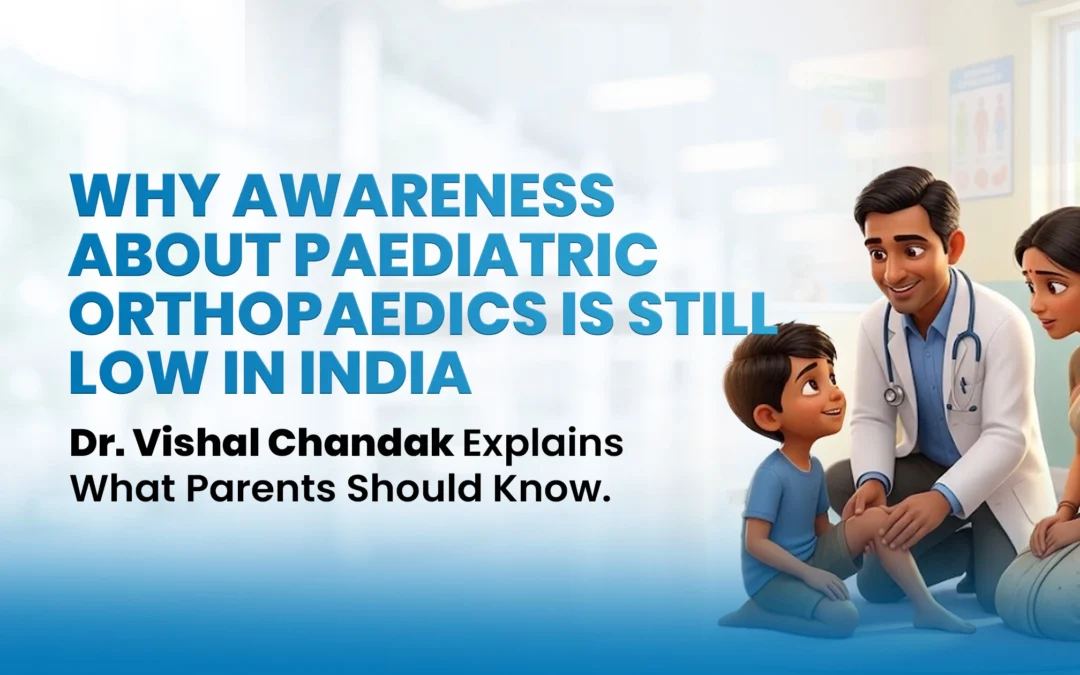
In India, parents are increasingly aware about paediatricians, vaccinations, and childhood nutrition. However, awareness about paediatric orthopaedics — the branch of medicine dedicated to bone, joint, and musculoskeletal problems in children — remains surprisingly limited.
According to Dr. Vishal Chandak, many children with orthopaedic conditions reach specialists much later than they should. In several cases, parents are unaware that a paediatric orthopaedic surgeon is different from a general orthopaedic doctor.
This lack of awareness can delay proper diagnosis and treatment.
What Is Paediatric Orthopaedics?
Paediatric orthopaedics focuses specifically on bone and joint conditions in growing children.
These conditions include:
- Congenital deformities such as clubfoot (CTEV)
- Limb deformities
- Paediatric fractures
- Hip disorders in children
- Cerebral palsy-related orthopaedic issues
- Growth plate injuries
Children’s bones are still developing, which means their treatment needs are very different from adults.
Why Children Require Specialised Orthopaedic Care
The musculoskeletal system in children has unique characteristics:
- Bones are still growing
- Growth plates are active
- Bone healing patterns differ from adults
- Certain deformities can correct naturally with growth
A paediatric orthopaedic specialist understands how treatment decisions will influence future growth and long-term mobility.
Generalised treatment without considering growth may lead to complications later.
Common Orthopaedic Symptoms Parents Often Ignore
Parents sometimes assume that children will automatically outgrow certain physical problems.
However, symptoms that should not be ignored include:
- Persistent limping
- Uneven walking patterns
- Delayed walking milestones
- Frequent falls
- Visible limb deformities
- Complaints of joint or bone pain
These signs may indicate underlying orthopaedic conditions that require evaluation.
Why Awareness Is Still Limited
Several factors contribute to the low awareness of paediatric orthopaedics in India:
- Limited information about specialised fields of medicine
- Belief that all orthopaedic issues are the same in adults and children
- Delayed medical consultation due to fear or uncertainty
- Dependence on informal advice or home remedies
Because early symptoms are often mild, many parents wait until the condition becomes more visible.
The Importance of Early Consultation
Early consultation with a paediatric orthopaedic specialist allows:
- Accurate diagnosis
- Monitoring of growth patterns
- Conservative treatment where possible
- Timely surgical intervention if required
In many cases, early treatment is simpler and more effective than late intervention.
The Role of Parents in Early Detection
Parents play an important role in identifying early signs of orthopaedic issues.
They should:
- Observe how the child walks or runs
- Pay attention to complaints of pain
- Notice posture or limb alignment
- Seek medical advice if symptoms persist
Early awareness prevents long-term complications.
A Growing Need for Awareness
As India’s healthcare system evolves, awareness about paediatric orthopaedics must grow alongside it. Educating parents about early signs and specialised care can significantly improve outcomes for children with musculoskeletal conditions.
Dr. Chandak believes that awareness is the first step toward prevention, early treatment, and healthy physical development in children.
Final Thought
Children’s bones and joints are constantly growing and changing. When orthopaedic problems are recognised early and managed by specialists, children have the best chance of developing strong mobility and independence.
Improving awareness about paediatric orthopaedics will help ensure that children receive the right care at the right time — protecting their growth for years to come.