
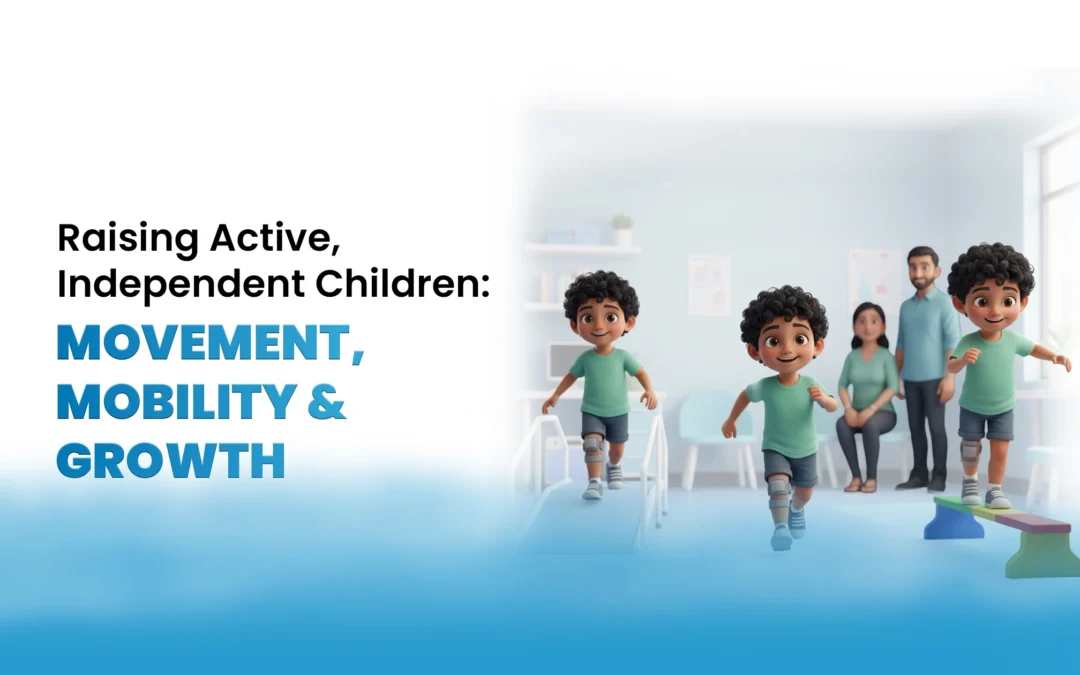
When parents talk about a child’s growth, the conversation often revolves around height, weight, or physical appearance. But according to Dr. Vishal Chandak, true growth is not defined by measurements alone—it is defined by movement, mobility, and independence.
In paediatric orthopedics, the ultimate goal is not just straight bones or perfect X-rays. It is raising children who can move confidently, participate freely, and grow into independent adults without physical limitations.
Why Movement Is the First Marker of Healthy Growth
From infancy to adolescence, movement tells a story.
How a child:
- Rolls
- Crawls
- Walks
- Runs
- Jumps
- Balances
often reveals more about growth and development than any report.
Dr. Chandak believes that movement patterns are early indicators of how a child’s musculoskeletal system is developing. Subtle delays or asymmetries, when identified early, can often be guided gently—without aggressive treatment.

Independence Begins With Mobility
A child’s independence is deeply connected to mobility.
When mobility is restricted, children may:
- Avoid physical activity
- Lose confidence
- Depend more on others
- Feel different from peers
On the other hand, children who move freely tend to:
- Explore more
- Build confidence
- Develop better coordination
- Engage socially without hesitation
Dr. Chandak’s approach focuses on protecting and enhancing this independence at every stage of growth.
Why “Normal” Movement Looks Different for Every Child
One of the biggest misconceptions parents have is expecting all children to move the same way at the same age.
In reality:
- Some children walk early, others later
- Some are naturally flexible, others stiff
- Some are cautious movers, others adventurous
Dr. Chandak advises parents to focus less on timelines and more on quality of movement:
- Is the child comfortable while moving?
- Is movement symmetrical?
- Is balance improving with age?
- Is the child avoiding activity due to discomfort?
Comparisons often create anxiety without adding value.
Encouraging Movement Without Forcing It
Parents often ask how to “improve” a child’s movement. Dr. Chandak emphasizes encouragement over enforcement.
Healthy movement develops best when:
- Children are allowed to play freely
- Physical activity is enjoyable, not pressured
- Screen time is balanced with active time
- Fear of falls or mistakes is not exaggerated
Overprotectiveness, while well-intentioned, can sometimes restrict natural development.
The Role of Early Guidance in Supporting Mobility
Early guidance does not always mean treatment. Often, it means:
- Identifying movement patterns early
- Advising activity modifications
- Suggesting simple exercises or play routines
- Monitoring growth over time
With timely guidance, many children naturally grow out of minor issues without intervention.
Dr. Chandak frequently reassures parents that the body has an incredible ability to adapt when guided correctly during growth years.
When Reduced Mobility Should Not Be Ignored
While variation is normal, certain signs need attention.
Parents should seek guidance if a child:
- Avoids using one limb
- Complains of pain during activity
- Has frequent falls beyond expected age
- Shows persistent limping
- Tires unusually quickly
- Avoids sports or play
Early evaluation helps differentiate between harmless variation and issues that need monitoring or intervention.
Why Independence Is a Long-Term Goal, Not a Short-Term Fix
Paediatric orthopedic decisions should always be future-focused.
Dr. Chandak evaluates:
- How today’s decisions affect adulthood
- Whether treatment enhances long-term independence
- If interventions preserve natural movement
Sometimes, doing less—at the right time—is better than doing more too early.
The Balance Between Guidance and Intervention
Not every child needs treatment.
Not every concern needs correction.
The key lies in balance:
- Guidance when growth is on track
- Intervention only when necessary
- Monitoring during critical growth phases
This balanced approach ensures children grow with confidence rather than fear.
A Message to Parents Across Marathwada
Raising active, independent children does not require perfection. It requires:
- Awareness
- Timely guidance
- Patience
- Trust in the growth process
Parents in Marathwada today have access to specialised paediatric orthopedic care that focuses not just on treating problems, but on nurturing movement and independence.
Final Thought
Strong bones matter.
Straight alignment matters.
But what matters most is this:
Can the child move freely, confidently, and independently?
According to Dr. Vishal Chandak, when mobility is protected during growth, independence follows naturally—and that is the true measure of healthy development.